


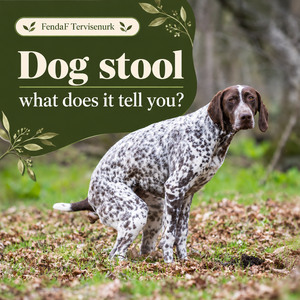
Dog stools: what can they tell you about health?
Reading time: about 7 min
I am one of those people who looks at their dog’s stools. Not because I am interested in unpleasant things, but because the pile I pick up on a walk sometimes provides the first clue that digestion is not quite normal. Consistency, quantity, colour and frequency are useful signs. They have limits, though: one large pile does not prove the food is poor, and one small pile does not confirm that every nutrient is being absorbed perfectly.
When we discuss nutrition at FendaF, we often ask whether the dog’s wellbeing and stools changed after a food switch. That is a perfectly reasonable observation. The mistake is turning it straight into a diagnosis. A few more useful questions belong between the food bag and the dog’s digestive system.
What are normal dog stools like?
Generally, they are brown, well formed and easy to pick up, neither rock hard nor watery. Some dogs defecate once a day, others twice or three times. Frequency depends on portions, fibre, exercise, food composition and the dog’s usual bowel rhythm. The most valuable comparison is with that same dog: has a pattern that was stable for weeks suddenly changed?
A faecal scoring chart can help. Purina’s seven-point scale, for example, ranges from very hard, dry stools to liquid diarrhoea. You do not necessarily need to record scores, but notes such as “formed but soft” or “third watery stool today” give a veterinarian more precise information than “an upset stomach”.
What does the amount tell us?
I still remember Peku’s example. Irene’s dog used to eat Hill’s Metabolic and produced three fairly substantial piles on long walks. After switching to Winner Plus Light Senior, both the amount and the number of bowel movements decreased. That was a real change in a real dog. But it cannot tell us either food’s exact digestibility percentage. Energy density, fibre type and quantity, daily food intake and water binding in the intestine can all substantially affect stool volume.
There is also a direct connection with nutrient digestibility. When a dog absorbs less from a food, more material may leave in the faeces; controlled feeding trials have found lower stool output alongside higher apparent digestibility. Integrative nutritional counselling also pays attention to this. However, a large pile alone cannot tell us how much protein, fat or energy was absorbed: fibre, water content and daily portions also influence stool mass. Repeatedly bulky, soft or greasy stools together with weight loss or unusual hunger warrant consideration of exocrine pancreatic insufficiency and small-intestinal disease, among other possibilities. These require veterinary diagnosis, rather than simply a different bag of food.
We once spoke to a customer whose dog weighed about 13 kilograms, was nursing puppies and reportedly ate nearly a kilogram of dry food a day. By comparison, my two German Shepherds together ate about 800 grams daily despite weighing almost 90 kilograms combined. That contrast raised my eyebrows. Lactation can indeed multiply energy requirements, but one kilogram of dry food with an energy density of 3,500 kcal/kg supplies 3,500 kcal a day. That is an exceptionally large amount for a small dog and cannot automatically be called normal just because she is nursing. To judge whether it was justified, we would need to know the litter’s size and age, the food’s energy content, the mother’s body condition and weight changes, and her actual daily intake. If such high intake comes with abundant stools, weight loss or constant hunger, digestion and nutrient absorption deserve assessment alongside energy requirements.
The same applies to strong odour. It can change with food, digestion, gut bacteria and intestinal transit, but does not automatically prove that a food contains “indigestible fillers”, especially if the dog feels well and maintains a stable weight.
Which colour and texture changes need attention?
Soft or watery stools
A single softer stool can follow a new treat, stress or a food change that happened too quickly. Repeated watery diarrhoea deserves greater attention because fluid loss can develop rapidly. If vomiting, lethargy, loss of appetite, blood, very black tar-like stools or abdominal pain occur as well, seek veterinary advice the same day; puppies and vulnerable animals may need help sooner.
In the past, a 24-hour fast was often recommended for adult dogs with watery diarrhoea. Fasting should certainly be avoided in puppies, very small dogs, older dogs and dogs with chronic illness. For puppies, the recommendation has been at most to skip one meal. Small, easily digestible meals may suit mild diarrhoea. Water must remain available because diarrhoea can cause dehydration. If it is severe or persistent, do not delay a veterinary visit while experimenting with food.
Hard, chalky or crumbly stools
If a dog strains and passes small amounts of dry stool, consider constipation. Too little water, low activity, pain, possible intestinal obstruction and diet are all relevant questions. Large amounts of edible bone can produce very pale, chalky, hard stools. Simply reducing bones is not the whole answer: if a home-prepared diet relies on bone for calcium, the overall calcium-to-phosphorus balance must still be correct. Repeated straining, pain, vomiting or inability to defecate require veterinary assessment, rather than a home enema.
Red or black stools, mucus and undigested pieces
Fresh red blood can indicate lower digestive tract irritation or another problem; black, tar-like stools can indicate digested blood and warrant prompt assessment. Mucus may occur with large-bowel irritation, but looking at the stool does not reveal the cause. Visible plant particles are not surprising: the cell walls of whole vegetables may pass through only partly broken down. Pieces of sock, toy or bone, however, suggest possible foreign-body ingestion and mean the dog’s need for examination should be assessed.
How much difference can changing food make?
Food affects stools in several ways. Easily digestible food leaves less undigested material in the intestine. Fibre, on the other hand, may deliberately increase stool volume, bind water and support normal bowel movements. A larger pile is therefore not always bad news, just as a small hard pellet is not always good news. Still, I think the relationship between what goes in and what comes out is always worth considering. With digestive problems, look beyond ingredients to food quantity, calories, treats, exercise, medication and whether the change began with one particular meal.
When Ossu was young, his stools remained paste-like and difficult to pick up for a long time. I remember feeling at one point that we might never get it right. Later, as his general health and wellbeing improved, his stools became much better formed. For me, this is a reminder that digestion is not an isolated compartment. But the story does not tell me which change was the cause and which merely happened at the same time.
What should you do if changes recur?
Observe at least the next three bowel movements and note colour, shape, amount, frequency, blood or mucus, as well as appetite, drinking, body weight and recent food and medication. If the dog is otherwise bright and has had just one mildly soft stool, brief observation may be reasonable. For recurring or unexplained problems, a veterinarian may test a stool sample for parasites, assess nutrition, perform blood tests or arrange imaging. Continually giving a probiotic should not conceal a problem whose cause needs investigating.
FendaF’s practical recommendation
Build a picture of your dog’s normal stools, daily bowel frequency and usual eating, drinking and activity. If something changes, take a photograph if useful and record food and medication changes during the previous three days. If you see blood, black tarry stools or severe watery diarrhoea with lethargy or vomiting, seek veterinary care instead of spending days switching foods.
Conclusion
Stools are a useful health barometer, but a barometer alone cannot tell you why the weather changed. Looking at the whole dog rather than one pile gives you a much better chance of recognising a real problem as well as changes that are entirely normal. Read more about the wider picture of digestion in our article A healthy gut.
Sources
- Cornell: causes and warning signs of diarrhoea in dogs
- Merck Veterinary Manual: constipation in dogs and cats
- Purina veterinary faecal scoring chart
- Merck Veterinary Manual: parvoviral enteritis and early feeding
- Merck Veterinary Manual: Exocrine Pancreatic Insufficiency in Dogs and Cats (2025).
- Merck Veterinary Manual: Malabsorption Syndromes in Small Animals (2026).
- Merck Veterinary Manual: Feeding Practices in Small Animals, lactation.
- Journal of Animal Science (2021). Nutrient digestibility and fecal characteristics in dogs fed human-grade foods. DOI: 10.1093/jas/skab028.
- PLOS ONE (2020). Apparent total tract digestibility, fecal characteristics, and blood parameters of healthy adult dogs fed high-fat diets. PMCID: PMC7059695.
🐾 FendaF believes in informed choices
The purpose of the FendaF blog is not to tell you what you must do. Our aim is to share knowledge, introduce different evidence-based and integrative perspectives, and help you make more informed decisions for your pet.
Every animal is unique, and no article can replace a consultation, diagnosis or treatment provided by a veterinarian. If your pet has a health concern or you need individual advice, always contact a veterinarian.
FAQ
No. Fibre, water, energy density and portion size all affect stool volume. Repeated bulky, soft or greasy stools with weight loss or unusual hunger warrant veterinary assessment.
Seek help for blood, black tarry stools, severe watery diarrhoea, vomiting, lethargy or abdominal pain. Puppies and vulnerable dogs may need care sooner.
No. A veterinarian may need to assess diet, parasites, blood tests or imaging. Ongoing probiotic use should not conceal a problem whose cause remains unexplained.





Leave a Reply