


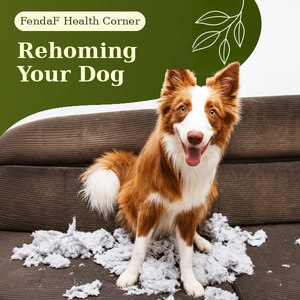
Finding a new home for your dog: what to try first
Reading time: about 6 min
Whenever I see an announcement seeking a new home for a dog, my heart sinks a little, especially when the reason is simply “he gets into trouble”. Adopting a dog is not like buying furniture that can be returned after the first scratch. Yet the more I have thought about it, the more clearly I see the other side: sometimes finding another home is the most responsible decision for the animal. The question isn’t merely whether someone gives up a dog, but why, what they tried first and what kind of life awaits the dog afterwards.
I have seen circumstances change very suddenly. My mother’s health declined over about four months. Someone who had been driving and taking walks became unable even to stand. In a situation like that, telling a person to “just try harder” is not reasonable. Life can change dramatically.
Mischief or normal behaviour in a young dog?
I once wrote about a littermate of Ossu’s who was being rehomed after chewing the corners of a terrace and the gate magnet. I struggled to contain my feelings. I knew exactly what those young German Shepherds were capable of. At around eighteen months, Ossu was a fountain of ideas even though he trained, went for walks and played with Faddu. As a puppy, he chewed door trim, terrace corners, the sandbox and even blankets placed on the stairs.
Faddu and Fentu had their own creative ideas. Around Christmas 2016, the sofa gradually lost its cushions, one by one. Once there were no cushions left, Faddu turned to the sofa itself. Our Labrador Peku probably got into more trouble than three German Shepherds combined. Yet I never saw any of them as simply a “bad dog”.
The ASPCA explains that chewing is a normal way for puppies and young dogs to explore and spend time. The problem is when it is directed at things we would rather protect. Not all destructive behaviour has the same cause: it may reflect curiosity, insufficient activity, frustration, pain or more serious distress when left alone. Calling every such dog “untrained” doesn’t help.
What should you actually do when a dog chews the house?
First, I would change the environment. If the same corner of the terrace is chewed every day, telling the dog off beside it will not solve the problem. Temporary barriers, suitable chews, supervision, mental enrichment and consistent reward-based teaching give the dog a chance to succeed. Training need not mean a new complicated exercise every day. Sniffing, searching games and calm time together matter too.
At the same time, look for patterns. Does chewing occur only when the family leaves? Does the dog howl, pant, rush between windows and doors or try to escape? These could be signs of separation-related distress. A longer walk or a stricter “no” is not a treatment for separation anxiety.
Punishing a dog after damage has been done is not sensible either. It does not explain what the dog should have done differently.
If the behaviour changes suddenly, becomes extreme or causes self-injury, potential medical problems need to be ruled out and an appropriate professional involved. The American Veterinary Society of Animal Behavior (AVSAB) recommends reward-based methods for training and behaviour problems. Methods based on fear or pain may suppress the visible behaviour while worsening the dog’s wellbeing.
When “you should have thought of that” no longer helps
Before getting a puppy, it makes sense to consider the breed’s needs, your schedule, finances, home and worst-case scenarios. A working dog may not politely burn off its own energy. Still, breed alone guarantees no particular temperament. The same litter may include a calm dog and a rocket scientist determined to invent a new use for every doorframe.
But what if the dog is already part of the family and everyone has reached breaking point? Guilt is not an action plan. Consider whether friends or relatives can help, whether daycare, a different routine, professional advice or a safer home arrangement could make a difference. If health, finances or safety make adequate care impossible, responsible rehoming must also remain a legitimate option.
There is a difference between giving away a dog impulsively after another ruined cushion and carefully arranging a move because the dog’s wellbeing can no longer be protected in the current home. Calling both simply “abandonment” makes it harder to help appropriately.
How to find a new home without causing even more loss
A suitable new home should meet the dog’s needs, not merely belong to the first person who responds to an advertisement. Tell the prospective family honestly about health, behaviour, fears, separation, habits and what has or has not helped. Arrange meetings, provide familiar objects and routines, and work with a trustworthy rescue group or shelter if necessary. A history of biting or a safety risk requires especially transparent, professionally guided arrangements, not concealment.
FendaF’s practical advice
- Keep a record for a week of when the problem occurs and what happens immediately beforehand; make safe video recordings if useful.
- Rule out pain and medical problems, and distinguish ordinary chewing from separation-related distress.
- Adjust the environment and teach alternative behaviours with rewards; do not punish after the fact.
- Seek help from a behaviour professional, veterinarian or temporary support network if needed, and assess your situation realistically.
- If rehoming is necessary, carefully choose the new home and disclose everything important, not just the dog’s most flattering photos.
A permanent home shouldn’t depend on the sofa
I’ve jokingly threatened to send my dogs to an orphanage when they’ve got into trouble again. But I also have a real backup plan should I ever become unable to care for them. To me, that responsibility is as much a part of having dogs as food and daily walks.
If your home currently hosts a canine demolition crew, asking for help is wiser than trying to cope alone while angry. And if you truly must find your dog another home, do it thoughtfully and put the dog’s welfare first. Loyalty does not mean holding on at any cost, but it certainly should not be determined by the fate of one terrace corner or sofa, especially during puppyhood.
We could probably write a whole book about our dogs’ adventures. If you have a story about your dog’s creative interior design that makes you laugh in hindsight, share it with us at info@fendaf.ee. Such stories remind us that life with dogs is never perfectly tidy, and that is often part of its value.
Sources
AVSAB. Humane Dog Training Position Statement.
RSPCA. Separation-related behaviour in dogs.
🐾 FendaF believes in informed choices
The purpose of the FendaF blog is not to tell you what you must do. Our aim is to share knowledge, introduce different evidence-based and integrative perspectives, and help you make more informed decisions for your pet.
Every animal is unique, and no article can replace a consultation, diagnosis or treatment provided by a veterinarian. If your pet has a health concern or you need individual advice, always contact a veterinarian.






Leave a Reply