


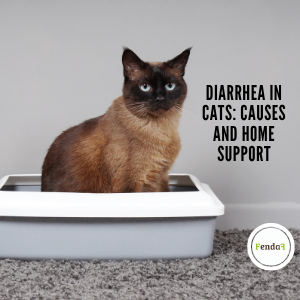
Diarrhea in Cats: When to Monitor and When to See a Veterinarian?
Reading time: about 7 min
Diarrhea in a cat can be a one-day unpleasant episode or the first sign of a problem that should not be watched at home for a week “to see what happens.” What matters is not only what the stool looks like. Look at the whole cat: is your cat eating, drinking, vomiting, lethargic, losing weight, visiting the litter box more often than usual, and how long has the change lasted?
Diarrhea is a symptom, not a diagnosis. A sudden food change or stress can cause a short-lived episode, but the same symptom can occur with parasites, chronic enteropathy or inflammatory bowel disease, pancreatitis, hyperthyroidism, infection, a foreign body, or another illness. That is why the first question in home care is always: is it actually safe to monitor this cat at home right now?
What can the stool tell us?
Veterinary medicine often distinguishes between small-bowel and large-bowel diarrhea. Small-bowel disease more often causes larger volumes of loose stool and may be associated with weight loss. Large-bowel disease may produce smaller amounts of stool more frequently, with mucus and straining. These patterns can point us in a direction, but the appearance of the stool alone cannot diagnose the cause.
Blood also needs context. Fresh red blood is more often associated with the large bowel or rectal area. Black, tarry stool, called melena, may indicate digested blood from higher in the gastrointestinal tract and needs more urgent assessment.
What can cause diarrhea in cats?
- a sudden food change or food that does not agree with the cat;
- stress;
- parasites, including Giardia and coccidia;
- viral or bacterial infection;
- food sensitivity or chronic enteropathy / inflammatory bowel disease;
- pancreatitis;
- a foreign body or toxin;
- a medication side effect;
- hyperthyroidism, liver disease, or kidney disease;
- a tumor or another systemic disease.
A list cannot tell you what is wrong with your particular cat. It does, however, explain why recurring or prolonged diarrhea should not automatically be labelled “the food upset the stomach.”
When should you not wait at home?
Cornell Feline Health Center recommends seeking veterinary care if diarrhea lasts longer than a day or two and the cat also has poor appetite, lethargy, or vomiting. In practice, it is sensible to act sooner if the cat is very young, elderly, or has a chronic illness. Contact a veterinarian promptly if your cat has:
- repeated or very watery diarrhea;
- blood in the stool or black, tarry stool;
- repeated vomiting;
- lethargy, weakness, pain, or fever;
- clear signs of dehydration;
- a marked decrease in appetite or refusal to eat;
- weight loss or recurring episodes;
- a possible foreign body or poisoning.
Eating deserves special attention in cats. If a cat with a normally good appetite suddenly stops eating, prolonged fasting “to rest the gut” is not a good idea. Cornell notes that anorexia can have a serious impact on an adult cat in as little as 24 hours. Overweight cats are at particular risk of hepatic lipidosis when food intake stops for too long.
What can you do at home for mild diarrhea?
If this is an adult cat who is otherwise bright, drinking and eating, and there is no blood in the stool, repeated vomiting, or other warning signs, a short episode can be monitored carefully. The focus is on hydration, continued food intake, and avoiding the temptation to add ten new “remedies” at once.
- always offer fresh water and pay attention to whether your cat is actually drinking;
- offer smaller, more frequent portions of food your cat already tolerates; if needed, discuss a highly digestible gastrointestinal diet with your veterinarian;
- if diarrhea began after a new food, step back and make any future transition more gradually;
- keep a simple log of stool frequency and appearance, appetite, vomiting, and general wellbeing;
- for recurring or persistent diarrhea, take a fresh stool sample to the veterinary appointment.
Moisture and food: more is not always better, but sudden change is often worse
Diarrhea causes loss of water and electrolytes, so adequate fluid intake matters. Cats are adapted to obtaining a meaningful share of their water from food, and a well-tolerated wet food can help support total fluid intake. This does not mean that every cat eating dry food should be switched abruptly to wet food during diarrhea. A sudden change can itself make the digestive upset worse.
If your cat already eats wet food and tolerates it well, you can see FendaF’s wet food for cats. During diarrhea, however, the goal is not to introduce a brand-new menu but to keep food intake and hydration as stable as possible.
A homemade “turkey + pumpkin” meal is not a universal recipe either. A simple, easily digestible meal may suit some cats for a very short period, but a one- or two-ingredient homemade diet is not complete and balanced for long-term feeding. With chronic diarrhea, a veterinarian may instead recommend a specific gastrointestinal diet, a hydrolyzed or novel-protein elimination diet, or another targeted food trial.
What about pumpkin?
Pumpkin contains soluble fiber and may improve stool consistency in some cats. But “diarrhea” is not one disease, and fiber is not equally suitable in every situation. Too much can unnecessarily dilute the diet or worsen digestion in some cats. A small amount may be worth discussing when the cat is otherwise eating well and the problem seems mild, but it does not replace finding the cause when the symptom keeps returning.
Probiotics: a possible tool, not one jar for every cat
The gut microbiome is relevant to diarrhea, and probiotics have also been studied in cats. In some studies, a specific bacterial strain or synbiotic reduced the incidence of diarrhea or improved other gastrointestinal outcomes. In other studies, the effect on stool consistency was not as clear.
So I would no longer simply say “give a probiotic.” Effects are product- and strain-specific and depend on the cause of the diarrhea. A probiotic can be one supportive part of the plan, but with bloody, recurring, or chronic diarrhea the important question is still why the symptom is happening in the first place.
What would I no longer recommend as routine home treatment for diarrhea?
Activated charcoal is not an ordinary remedy for “firming up” diarrhea. In veterinary medicine it is used for selected poisonings to reduce absorption of certain toxins. It has its own risks, including aspiration and hypernatremia, and the Merck Veterinary Manual recommends limiting its use to poisonings in which the benefit is known.
I also would not experiment with peppermint, fennel, and chamomile as general remedies for feline diarrhea. Herbal preparations absolutely have a place and can be useful in the right context, but a “herbal product” is not one standardized thing: safety depends on the plant species, the plant part, the extract, concentration, and dose. Cats also metabolize many compounds differently, so “natural” does not automatically mean safe.
If diarrhea keeps coming back, ask “why?”
With recurring or chronic diarrhea, the aim is not to “stop” each episode separately. Depending on the cat’s age, symptoms, and history, a veterinarian may recommend fecal testing and parasite tests, blood and urine tests, thyroid testing, pancreatic tests, ultrasound, or a diet trial. Not every cat needs every test, but the longer and more repetitive the problem becomes, the less useful random home experimentation is.
This is also where integrative and conventional veterinary perspectives fit together very well. One asks what the underlying cause is and whether diagnosis or treatment is needed. The other reminds us that diet, stress, hydration, the microbiome, and everyday habits are also real parts of gastrointestinal health. They do not need to compete with each other.
In summary
One soft stool does not automatically mean disease. But a cat is not a small dog that can casually be put on a prolonged fast or have diarrhea “stopped” with activated charcoal. The most important questions are simple: is the cat eating, drinking, and behaving normally; how severe and frequent is the diarrhea; and are there any other warning signs?
For a mild, short-lived episode, sensible home support can be completely appropriate. But if the symptom keeps returning, lasts, the cat stops eating, vomits, becomes lethargic, or there is blood in the stool, the goal is no longer to find one more home trick. It is time to find the cause.
Sources:
- Cornell Feline Health Center – Diarrhea
- Cornell Feline Health Center – Anorexia
- Cornell Feline Health Center – Pancreatitis
- Cornell Feline Health Center – Gastrointestinal Parasites of Cats
- Merck Veterinary Manual – Principles of Toxicosis Treatment in Animals
- Laflamme et al. 2011 – Effect of diets differing in fat content on chronic diarrhea in cats, PubMed
- Gookin et al. 2022 – Feline-origin Enterococcus hirae probiotic trial, PubMed
- Whittemore et al. 2017 – Synbiotic and clindamycin-associated GI signs in cats, PubMed
🐾 FendaF believes in informed choices
The purpose of the FendaF blog is not to tell you what you must do. Our aim is to share knowledge, introduce different evidence-based and integrative perspectives, and help you make more informed decisions for your pet.
Every animal is unique, and no article can replace a consultation, diagnosis or treatment provided by a veterinarian. If your pet has a health concern or you need individual advice, always contact a veterinarian.








Leave a Reply