


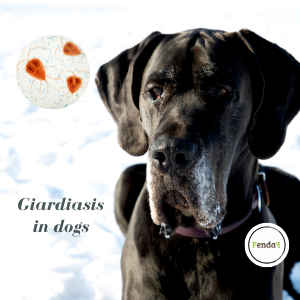
Giardiasis in dogs: can and how should you support your dog at home?
When I wrote the first version of this article, I had only recently heard of giardiasis. When my own dogs were puppies, this parasite was hardly discussed at all. Today Giardia is much more familiar to dog owners, but there is still plenty of confusion: does a positive test always mean treatment, is metronidazole the only option, and can natural approaches genuinely help?
First, the terminology. Giardia is a microscopic single-celled parasite, or protozoan. Giardiasis is the disease that may develop as a result of infection. The important distinction is that a dog can test positive for Giardia without showing any signs of illness.
What does Giardia do in a dog’s gut?
A dog becomes infected after swallowing Giardia cysts from the environment. In the small intestine, the cysts release active forms called trophozoites, which attach to the intestinal epithelium. This can interfere with nutrient absorption and alter the function of the intestinal barrier. Some parasites turn back into cysts and leave the body in the feces, from where they can reinfect the same dog or spread to other animals.
Cysts can survive for a long time in damp environments, which is why giardiasis can be particularly persistent in places with many animals, moisture and repeated contact with feces. Reinfection can occur even after successful treatment.
What symptoms can accompany Giardia?
Many Giardia infections cause no symptoms at all. When signs do occur, the more typical ones are chronic or intermittent soft stools and diarrhea, mucus in the feces, a strong odor, sometimes vomiting, reduced appetite, weight loss and lethargy. Signs may be especially noticeable in puppies, stressed dogs, immunocompromised dogs or dogs with another concurrent intestinal problem.
These signs are not specific to Giardia. If diarrhea keeps returning or persists, it is worth looking for the cause rather than assuming from the appearance of the stool that Giardia must be responsible.
Diagnosing Giardia is not always a one-sample question
Giardia cyst shedding can fluctuate. ESCCAP recommends that, when microscopy is used, three fecal samples collected over 3–5 days may be needed. Giardia antigen tests and, in certain situations, PCR can also be used. A single negative sample can therefore miss an infection simply because too few cysts were being shed at that moment.
The opposite nuance is just as important: a positive test does not automatically mean that Giardia is causing the dog’s symptoms, or that a completely healthy Giardia-positive dog definitely needs treatment.
Does every Giardia-positive dog need treatment?
The 2025 ESCCAP guideline recommends treating a Giardia-positive dog that has gastrointestinal signs. In a clinically healthy positive animal, treatment is not automatically recommended; the decision is based on risk assessment. Treatment may still make sense, for example, in kennels, breeding establishments, multi-pet households, or where close contacts include young children or immunocompromised people.
This is an important change from the older mindset in which a positive Giardia test could immediately sound like “start a treatment course.” The goal is not to chase every last cyst, but to resolve clinical signs, reduce infection pressure and prevent reinfection.
Conventional treatment: fenbendazole is not an antibiotic
ESCCAP lists fenbendazole and metronidazole as effective treatment options. Fenbendazole is an antiparasitic drug, not an antibiotic, and is widely used for canine giardiasis in Europe.
Metronidazole is an antimicrobial drug and can act against Giardia, but ESCCAP recommends using it more selectively, including where fenbendazole has not been sufficiently effective, partly to reduce unnecessary antibiotic use. Metronidazole can also affect the canine gut microbiome, and neurological adverse effects have been described with prolonged or inappropriate use. It is therefore not a good idea to use leftover medication at home or start treatment without a diagnosis.
Why does treatment sometimes “not work”?
With Giardia, a new positive test does not always mean drug resistance. A dog can become reinfected from its environment almost immediately. There may also be another or concurrent cause behind the symptoms. This is why environmental hygiene is just as important as medication.
- Pick up feces quickly and regularly.
- Wash food and water bowls daily and let them dry thoroughly.
- Wash and dry the dog’s bedding, blankets and washable toys.
- Keep the environment as dry as possible because Giardia cysts thrive in moisture.
- At the beginning and end of treatment, bathing the dog may be recommended by the veterinarian to reduce reinfection from fecal material and cysts left on the coat.
Nutrition and restoring the gut
This is one area where integrative and conventional medicine meet quite naturally. ESCCAP notes the value of nutritional management during clinical giardiasis, including easily digestible food and attention to diet quality, because nutrition influences both the intestinal microbiome and recovery. Changes should be tailored to the individual dog, especially when diarrhea is severe or other diseases are present.
Studies of metronidazole have shown changes in the gut microbiome that may persist for weeks after treatment. That does not mean the drug should not be used when needed. It means that after gastrointestinal disease and a treatment course, it is reasonable to think about gut recovery as well: well-tolerated food, adequate hydration and, where appropriate, a veterinarian-recommended probiotic or other gastrointestinal support.
For more on gut support, see Sensitive Digestion in Dogs: How to Support the Gut Calmly.
Can natural approaches help?
Yes, they can be used as supportive measures, but I would not present them as a direct replacement for conventional treatment. Among our customers there have been dogs whose symptoms improved while natural approaches were being used, and that experience is real. At the same time, firmer stool alone does not prove that Giardia has disappeared from the body or that one particular herb eliminated the parasite.
Our customer experience
One FendaF customer contacted us after her dog had been diagnosed with giardiasis in spring and treated with metronidazole, after which the dog’s digestive recovery had taken a very long time. A few months later there was a new suspicion of Giardia. The owner had already been using cloves and garlic granules; we suggested adding Oregon grape and colostrum as supportive measures. Within about a week, the dog’s stool returned to normal.
This is a real experience and valuable information to me, but we cannot conclude from it that the combination definitely cleared Giardia because the parasite burden was not measured before and after the supportive approach. I see it as an example of how integrative measures can be a useful part of a broader plan for some dogs.
Garlic
Garlic is used in integrative animal nutrition partly because of its antimicrobial and antiparasitic potential. There are laboratory and human-medicine data related to Giardia, but we do not have strong canine clinical evidence that would justify calling garlic a treatment for giardiasis. If it is used, dose, the dog’s health status and possible interactions all matter.
I have covered this topic in more detail in Garlic and dogs: poison, medicinal herb, or a matter of dose?.
Cloves
Cloves and their main bioactive compound, eugenol, have shown antiparasitic activity in laboratory studies, but this does not give us a proven canine treatment for giardiasis or a universal dose. I would especially avoid giving a dog concentrated clove essential oil without professional guidance. Small culinary amounts of clove and clove essential oil are not the same thing.
Oregon grape and berberine
Oregon grape and other berberine-containing plants have a long history in integrative medicine, and there are data on berberine’s activity against Giardia. However, strong dog-specific clinical evidence and a standardized canine dose are lacking. I therefore regard it as supportive herbal medicine rather than a stand-alone treatment, with particular caution during pregnancy, liver disease and concurrent medication use.
Colostrum
The purpose of colostrum here is not to “kill” Giardia, but to support the gastrointestinal and immune barrier. That can be perfectly logical in an integrative plan, but colostrum is not an antiparasitic drug.
Can a person catch Giardia from a dog?
Theoretically yes, but according to ESCCAP, transmission from dogs or cats to people appears to be relatively uncommon. Dogs frequently carry canine-adapted Giardia assemblages C and D, while assemblages A and B predominate in people. Hygiene still matters, especially in households with young children, elderly people or immunocompromised individuals.
In summary
Giardiasis is not as simple as “positive test = antibiotic,” and it is not as simple as “give a couple of herbs and the parasite is gone.” The most sensible approach is to combine diagnostics, the dog’s clinical signs, evidence-based treatment when needed, environmental hygiene and restoration of the gut.
Natural approaches can be a valuable supportive part of the plan for some dogs, and we have genuinely good experiences among FendaF customers. For me, an integrative approach does not need to compete with conventional treatment. It works best when we use what makes sense from both, for that particular dog, and then check whether the dog is actually getting better.
For practical diarrhea support, see Diarrhea in dogs – home remedies, fasting and when to see a vet.
Sources:
- ESCCAP Guideline 06 – Control of Intestinal Protozoa in Dogs and Cats, 3rd edition, 2025
- Effectiveness of Fenbendazole and Metronidazole Against Giardia Infection in Dogs, 2021
- Effects of Giardia colonization and fenbendazole treatment on canine fecal microbiota, 2020
- Conserved signatures of the canine faecal microbiome associated with metronidazole treatment and recovery, 2024
- Giardiasis: pathophysiology and management – integrative/nutritional review, 2003
- Dogs Naturally – Naturally Get Rid of Giardia in Dogs
🐾 FendaF believes in informed choices
The purpose of the FendaF blog is not to tell you what you must do. Our aim is to share knowledge, introduce different evidence-based and integrative perspectives, and help you make more informed decisions for your pet.
Every animal is unique, and no article can replace a consultation, diagnosis or treatment provided by a veterinarian. If your pet has a health concern or you need individual advice, always contact a veterinarian.








Leave a Reply