


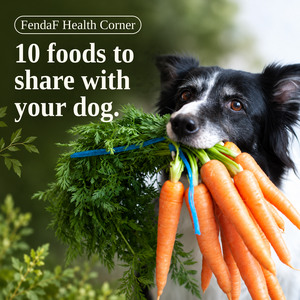
10 Foods You Can Share With Your Dog
Reading time: about 4 min
Sometimes it feels as though dogs should never eat anything from our plates. In fact, quite a few fruits and vegetables can be shared as small treats. After reading Dr Karen Shaw Becker’s overview of ten such foods, I also looked at veterinary nutrition and safety guidance. There is an important distinction: “safe for dogs” does not mean “unlimited quantities” or “a cure for disease”.
Choose unseasoned foods, offer small amounts and consider your own dog’s tolerance. Extras should generally account for no more than 10% of DAILY CALORIES, not 10% of the food bowl’s weight. The rest should come from a complete and balanced diet.
Wash and prepare produce regardless of its country of origin. The country where it was grown does not, by itself, prove that it is free from residues.
One more clarification: this list is primarily for dogs. Cats have different nutritional needs and do not require these plants in their diets. Do not automatically turn a list of canine treats into feeding advice for cats.
Ten possible extras and what to watch for
Fruit and berries
Apple. A slice of apple can be a pleasantly crunchy treat. Wash it, remove the core and seeds, and cut it into suitable pieces. The peel is generally fine if clean and tolerated. Avoid large pieces that could cause choking. Apples contain fibre, but a slice is not a vitamin treatment.
Blueberries. Fresh or thawed frozen blueberries can make a nice little treat. They contain fibre and pigments called anthocyanins, but we cannot promise specific health improvements simply from feeding blueberries to a dog.
Vegetables
Asparagus. Small pieces of plain asparagus cooked until soft may suit some dogs. Raw stalks can be tough and harder to digest. Asparagus contains fibre, but claiming that a single food “builds the microbiome” goes too far.
Broccoli. Small amounts of washed raw or steamed broccoli are possible. Larger servings can cause gas or gastrointestinal irritation. Broccoli contains plant compounds being studied for their effects, but that does not mean it treats cancer, heart disease or skin lesions in dogs.
Carrot. Many dogs enjoy crunching carrots. Cut them to a size that reduces choking risk. Carrot can be a training reward, but it still counts towards treats. If you have a food-loving dog, a tiny piece of carrot may make them just as happy as a large biscuit. :)
Cucumber. Cucumber contains plenty of water and little energy, making it a possible low-calorie treat. But eating cucumber does not compensate for insufficient drinking water, and it is not a treatment for cancer or diabetes.
Green beans. Plain cooked or steamed green beans can be a relatively low-energy treat. Avoid salted canned beans and large amounts that may upset some dogs’ stomachs.
Kale. Kale contains vitamins and fibre, but it is not a canine “liver cleanse”. If your dog tolerates it, you can try a small amount of finely chopped, unseasoned kale. I would avoid large portions, particularly for dogs with health problems or a risk of calcium oxalate urinary issues.
What I appreciate about integrative veterinarians is their emphasis on whether a food suits the individual animal, rather than searching for one “superfood” for every dog. For a dog already eating a complete diet, these extras mainly offer variety and enrichment, not treatment or an essential source of missing nutrients.
Dairy products
Kefir. Plain kefir may suit some dogs as a small addition or on a licking mat, but others do not tolerate dairy and may develop diarrhoea. Check for added sugars and sweeteners. The bacterial content of fermented dairy varies by product. Lactose-free dairy products are now available, so even a dog that does not tolerate lactose may be able to benefit from kefir.
Fermented foods
Fermented vegetables. This is where I would be most cautious. Fermented vegetables intended for people may contain a lot of salt, onions or spices that are unsuitable for dogs. If you try them at all, the ingredients must be safe for dogs and the portion very small. Some integrative veterinarians use fermented vegetables in attempts to remove heavy metals or as part of a “detox programme”, but those effects are not sufficiently substantiated. That does not necessarily mean no effect is possible; it means we should ask what we are trying to achieve. If the goal is gut support, consider whether the individual dog actually needs a dietary change or a probiotic product with supporting research.
How should you start? Introduce one new food at a time, offer a small amount and watch the stool, skin and overall wellbeing. If your dog has chronic intestinal disease, pancreatitis, kidney problems or is undergoing a strict elimination diet, do not add extras without consulting your veterinarian. Even a very “healthy” food may be unsuitable for a particular dog.
Sources and further reading
WSAVA Nutrition Committee, Feeding Treats to Your Dog: https://wsava.org/wp-content/uploads/2024/06/Feeding-treats-to-your-dog-v2.pdf
UC Davis School of Veterinary Medicine, Treat Guidelines for Dogs: https://healthtopics.vetmed.ucdavis.edu/health-topics/canine/treat-guidelines-dogs
ASPCA Animal Poison Control, People Foods to Avoid Feeding Your Pets: https://www.aspca.org/pet-care/aspca-poison-control/people-foods-avoid-feeding-your-pets
FDA, Potentially Dangerous Items for Your Pet: https://www.fda.gov/animal-veterinary/animal-health-literacy/potentially-dangerous-items-your-pet
Original article inspiration: Dr Karen Shaw Becker: https://healthypets.mercola.com/sites/healthypets/archive/2022/08/09/human-food-for-pets.aspx
🐾 FendaF believes in informed choices
The purpose of the FendaF blog is not to tell you what you must do. Our aim is to share knowledge, introduce different evidence-based and integrative perspectives, and help you make more informed decisions for your pet.
Every animal is unique, and no article can replace a consultation, diagnosis or treatment provided by a veterinarian. If your pet has a health concern or you need individual advice, always contact a veterinarian.









Leave a Reply