


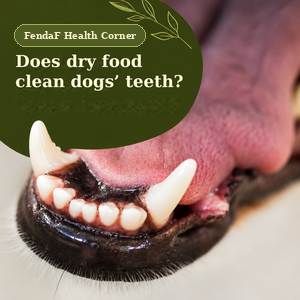
Cleaning your dog’s teeth naturally: does dry food really clean them?
Reading time: about 7 min
I keep hearing the claim that dogs must eat dry food because it cleans their teeth. My first response is usually: how, exactly? Ordinary kibble breaks apart fairly quickly under a tooth, and many dogs barely chew it. That does not mean no dry food can support dental health. The question is how a particular product is designed and what evidence supports it.
Faddy, Fenton and Oscar show why sweeping statements are risky. Oscar and Faddy chew more vigorously and ask for dried treats more often. Fenton chews in his own way and has had more tartar. That is my observation, not proof that chewing intensity alone explains the difference between three dogs’ teeth. Age, genetics, tooth alignment, saliva, oral hygiene and feeding habits all play a part.
Plaque and tartar are not the same
Dental plaque is a soft bacterial biofilm that forms on the tooth surface, especially along the gumline. It can gradually mineralise into tartar. Visible tartar is only part of the problem: inflammation below the gumline and possible periodontal disease may be invisible at home. White-looking teeth in a photograph do not tell the whole story.
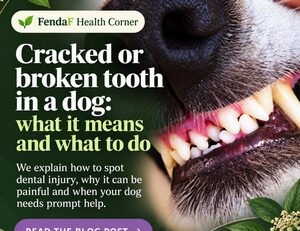
If the gums bleed, breath remains unpleasant, a dog chews on one side only or avoids chewing things it used to love, it is worth having the mouth examined. A dog may continue eating even with painful teeth. A fractured tooth, gum disease or infected root will not be cured by a supplement or a bone.
Can kibble actually clean a dog’s teeth?
We cannot assume ordinary dry food provides effective mechanical cleaning. Kibble shape and texture vary, as does the way dogs chew. But specially designed dental diets exist that have been tested for reducing plaque or tartar. The Veterinary Oral Health Council (VOHC) publishes lists of products that have earned its seal. That recognition applies to a specific product and outcome, not to dry food as a whole. I would still inspect the ingredients, because cleaning teeth should not, in my view, come at the expense of the overall formulation.
The same principle applies to treats marketed as dental chews. Not every stick labelled “dental” is the same, but the ingredients list alone does not make every product useless or harmful either. Check ingredients, safety, calories and whether the claimed effect has actually been measured. A dental chew is not a compulsory part of a dog’s diet, though a suitable one can be helpful.
Dogs need to chew, but excessively hard objects can break teeth
My dogs have always loved chewing. Beef ears, trachea, beef snouts and various hide-based chews give them something to work on for longer than a few seconds. Chewing meets a natural behavioural need and, with suitable products, may help reduce plaque accumulation.
There is an important limit. Very hard bones, antlers and other rigid items can fracture teeth. Just because a dog can break something does not mean it is safe for the teeth. A large, powerful chewer does not necessarily need the hardest possible bone. Raw bones also carry risks of choking, intestinal injury and microbes. So a raw bone should not be recommended as a universal toothbrush.
I choose chews appropriate for the dog’s size and chewing style, avoiding rock-hard items and things that shatter into sharp pieces. If a dog swallows large chunks or breaks things especially forcefully, another option is warranted. I watch my dogs while they chew and do not leave them alone with an unfamiliar chew. Chewing time should be safe, not a dental lottery.
Seaweed: an interesting option, not a miracle cure
At FendaF we have discussed dental care products containing seaweed. There is research on them, but it needs careful interpretation. In one placebo-controlled study involving 60 dogs, a treat containing the brown seaweed Ascophyllum nodosum was given for 90 days after professional dental cleaning. Some measured outcomes, including plaque and tartar accumulation, were better in the treatment group. This is an interesting and potentially useful finding.
However, a single trial using one formulation, dose and duration does not prove that all seaweed supplements work equally well or that they cure established gum disease. Marine plants can be rich in iodine, so suitability for animals with thyroid conditions needs particular consideration. Dosage should not be guessed.
Should we brush a dog’s teeth, and is professional cleaning done under anaesthesia?
I have sometimes preferred offering my dogs longer chewing sessions because tooth brushing takes training and not all dogs enjoy it. Even so, regular brushing is among the most effective ways to reduce plaque at home. VOHC and veterinary dental professionals recommend daily brushing where possible. If that is not realistic, consistent partial care is still better than none.
Once tartar and gum disease are present, neither a toothbrush nor chewing can reach beneath the gum. A thorough dental examination, radiographs when needed and cleaning below the gumline require general anaesthesia at the veterinary clinic. Anaesthesia carries risks that must be assessed for each animal. But it would be wrong to assume that anaesthesia is automatically more dangerous than leaving dental disease untreated. Dogs with chronic illness need an individual plan.
What would I actually recommend?
Look into your dog’s mouth once a week, gradually teach brushing through short positive sessions and offer safe opportunities to chew. If you use a dental diet, chew or seaweed product, check the evidence for that specific product and whether it is appropriate for your dog. Do not let an appealing extra conceal inflamed gums or a broken tooth.
With Irene’s dog Fenton, we saw changes in the appearance of his teeth after adjustments to chewing habits and the use of Winner Plus Algomar seaweed. That is our experience, and experiences like this raise worthwhile questions. But if a dog owner takes just one suggestion from this article, let it be this: care for the teeth consistently rather than waiting until pain becomes obvious.
Sources
- VOHC: Accepted Products
- VOHC: Toothbrushing
- AAHA: 2019 Dental Care Guidelines
- VCA: Why bones are not safe
- Ascophyllum nodosum study (2018)
🐾 FendaF believes in informed choices
The purpose of the FendaF blog is not to tell you what you must do. Our aim is to share knowledge, introduce different evidence-based and integrative perspectives, and help you make more informed decisions for your pet.
Every animal is unique, and no article can replace a consultation, diagnosis or treatment provided by a veterinarian. If your pet has a health concern or you need individual advice, always contact a veterinarian.



Leave a Reply