


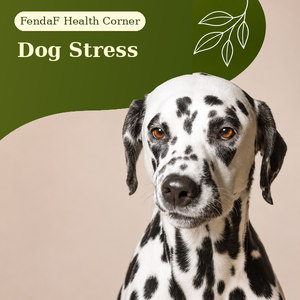
Stress in dogs: ten human habits that may cause tension
Reading time: about 7 min
We often look for the causes of a dog’s stress outside the home: thunderstorms, fireworks, unfamiliar dogs or being left alone. But how often do we ask what impact our own tone of voice, movements or expectations might have? Researching this subject made me look in the mirror. I realised that something a person does with the best intentions may feel very different to a dog.
I once read integrative veterinarian Karen Shaw Becker’s discussion of ten human habits that can stress dogs. Some examples were familiar; others made me think. I do not believe any one gesture always causes stress in every dog. The situation, previous experiences and the individual dog’s body language all matter. But these ten questions are an excellent way to examine our own behaviour.
Research supports a thoughtful approach. A 2019 study comparing hair cortisol levels in 58 dogs and their owners found an association between them. That does not prove that every anxious moment in the owner causes stress in the dog, or that cortisol alone measures wellbeing. The study involved two breeds and a specific sample. Nevertheless, it reminds us that life between people and dogs is genuinely a two-way relationship.
1. We punish the dog for an opportunity we left within reach
The dog sees a sock on the floor, a fresh loaf or an interesting shoe and explores it with its mouth. We see destruction. They are two interpretations of the same event. I’m reminded of Irene’s stories about Pekwa. If the utility-room door was ajar, Pekwa found a sock. Later, when Pekwa was older, Fenton even began bringing socks over. Once, a pot of borscht was left on the stove; when everyone returned home, there was soup everywhere, even on the ceiling. These stories are funny in hindsight, but swallowing socks can be genuinely dangerous.
Punishing the dog long after the event does not teach a safe alternative. It is much better to keep socks out of reach, provide suitable chews and teach what is allowed. If a dog has swallowed something, do not assume it will always vomit the object back up. Contact a veterinarian promptly when necessary.
2. We say “no” without showing what to do instead
If a dog jumps on someone and hears “no”, it might stop for a moment. But what exactly would we prefer? Sitting? Keeping all four paws on the ground? Walking away calmly? Teaching works better when the desired behaviour is clear and rewarded at the right moment. Reward-based training does not mean having no boundaries. It means showing the dog a way to succeed within them.
3. We use a different word for the same action every time
“Come here”, “come on”, “here”, “get over here” and “what are you waiting for?” may mean the same thing to a person. A dog learns particular words, tones and contexts, not a dictionary of synonyms. Especially at the beginning, use one consistent cue for an action and practise in different settings. One confusing cue is not automatically harmful, but repeated misunderstanding can frustrate both sides.
4. “It’s all right” becomes a warning that something unpleasant is coming
I still remember taking my first German Shepherd puppy to be microchipped. To comfort him I said, “It’s all right.” At that particular moment, things were obviously not very pleasant for him. When the same words repeatedly precede an unpleasant procedure, a dog may learn to associate them with discomfort. That is a possible learning mechanism, not a rule that the phrase must never be used.
It is more helpful to build new experiences: gentle practice, short pleasant clinic visits, appropriate rewards and, when possible, teaching cooperative care. Fear of veterinary or grooming procedures cannot be solved with words alone; what matters is how the experience actually feels to the dog.
5. We pull on the lead and forget the dog has a nose
A walk isn’t just a trip from A to B for the owner. Dogs want to pause, investigate smells and read their “pee-mail”. Constantly dragging them onwards may increase tension, particularly if the environment already scares them. Loose-lead walking can be taught without sudden jerks or painful equipment. Sometimes, of course, we must move a dog quickly away from danger. In those moments safety matters more than a perfect training exercise.
6. We hug or kiss a dog that is trying to move away
Some dogs actively seek human closeness and enjoy close contact. Others tolerate it patiently. A hug from a stranger can be particularly restrictive because it makes moving away difficult. Look at the whole body: does the dog approach willingly and remain soft and relaxed? Or does it turn its head, stiffen, lick its lips and try to leave? The latter is not “stubbornness” but may be a request for space.
7. We stare intensely at the dog
Looking into a dog’s eyes is not inherently bad. Gentle eye contact between a familiar person and dog can be part of an affectionate relationship. But a rigid posture, leaning directly over the dog and maintaining an intense stare can feel threatening. If the dog appears uncomfortable, turning our body slightly sideways and letting it decide whether to make contact may be enough to ease the situation.
8. We wag a finger and marvel at the “guilty” look
The problem with finger-wagging may not be the finger itself. It often comes with a raised voice, tense posture and a person moving towards the dog. The dog may crouch, look away or wag its tail low. We sometimes interpret that as guilt. In reality, the behaviour tells us more about the dog’s response to a person’s mood and the situation than about any moral judgement of its earlier action.
9. We use one command for two different behaviours
If “down” sometimes means “lie down” and at other times “get off me”, confusion is hardly surprising. Choose a distinct cue for each action, such as “lie down” and “paws on the floor”. More importantly, practise calmly and reward the moment when all four paws touch the floor. Consistency helps, but nobody needs a perfect vocabulary.
10. We startle a sleeping dog awake
Dogs need sleep and rest. If there is no reason to disturb them, let them sleep. This is especially important in families with children: a sleeping dog should not be shaken, jumped on or suddenly hugged around the face. If you need to wake a dog, speak calmly from a little distance so it has time to understand what is happening. The point is not that a dog must never be touched, but that its resting place deserves respect.
How can you tell when stress is building up?
One yawn or lip lick does not automatically mean anxiety. A dog may yawn because it is sleepy or lick its lips after eating. Look at combinations of signs and the context: a stiff body, trembling, hiding, rapid breathing without heat, pacing, freezing, attempting to escape or unusual barking tell us more than any single movement.
If behaviour changes suddenly or remains concerning, consider pain and other medical issues. Some dogs may require veterinary treatment alongside behaviour support. Stress is not simply a bad mood, but neither should every change in behaviour automatically be labelled stress.
FendaF’s practical advice
- Ask yourself what exactly you expect the dog to do in this situation and whether you have taught that behaviour.
- Look at the whole dog, not just the tail. Does it choose to approach or try to move away?
- If something goes wrong, change the situation and offer a clear alternative first; don’t punish after the event.
- Allow time on walks to sniff, rest and move away from uncomfortable situations when needed.
- If fear, aggression or anxiety intensifies, don’t try to solve it with louder commands or harsher equipment.
Fewer perfect commands, more attention to each other
I like to think that living with dogs is a constant exchange of lessons. I teach them how to cope in our world. They teach me that sometimes the problem is not the dog, but my hurry, habit or expectation. And sometimes just noticing that before raising my voice is enough.
I don’t want this to become yet another list designed to make dog owners feel guilty. None of us behaves perfectly all the time. Instead, these ten questions can help us make a different choice in small everyday moments. Dogs cannot explain their experiences in words, but their bodies and behaviour tell us quite a lot. Our task is to learn that language.
Sources
Vieira de Castro et al. (2020). Does training method matter? PLOS ONE.
AVSAB. Humane Dog Training Position Statement.
AAHA. Common Signs of Anxiety/Distress.
AAHA. Tips for reducing patient fear in the veterinary clinic.
🐾 FendaF believes in informed choices
The purpose of the FendaF blog is not to tell you what you must do. Our aim is to share knowledge, introduce different evidence-based and integrative perspectives, and help you make more informed decisions for your pet.
Every animal is unique, and no article can replace a consultation, diagnosis or treatment provided by a veterinarian. If your pet has a health concern or you need individual advice, always contact a veterinarian.









Leave a Reply