


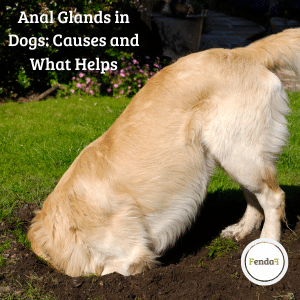
Pärakupaunad probleemiks?
When a dog starts scooting across the carpet, licking under the tail, or suddenly produces a smell that makes you wonder whether someone opened a biological weapon indoors, anal glands quickly enter the conversation. And just as quickly comes the solution: they need to be squeezed empty.
But there is one question worth asking first: why were the dog’s anal sacs unable to do their job on their own this time?
This is one area where conventional and integrative veterinary approaches actually meet quite nicely. If an anal sac is already impacted, inflamed or abscessed, veterinary treatment and manual expression may be needed. But if the problem keeps returning, the whole plan should not be limited to squeezing the sacs again every few weeks. It is worth looking at the bigger picture: what the dog’s stool is like, what the dog eats, whether diarrhea or other digestive problems occur, body condition, and whether skin or allergy symptoms are present at the same time.
What are anal glands anyway?
Dogs have two small anal sacs beside the anus, roughly at the four and eight o’clock positions. Glands in their walls produce a strong-smelling secretion. It is not exactly perfume-counter material to the human nose, but in the canine world it has a purpose: anal sac secretions are involved in chemical communication.
Normally, the anal sacs empty at least partly during defecation. As formed stool passes through the rectum, it creates mechanical pressure in the area and helps the secretion leave the sacs. So when it comes to anal glands, poop quality is far from a trivial detail.
An anal sac problem is not always just a “full gland”
Scooting, licking or chewing under the tail, or discomfort while defecating can point to an anal sac problem, but these signs do not tell us exactly what is happening. A sac may simply be impacted, meaning the secretion cannot exit normally, but inflammation, infection, an abscess and, more rarely, a tumor are also possible.
Likewise, itching around the anus does not automatically mean anal sac disease. In one study of 250 dogs with skin disease, perianal itching occurred more often in dogs with atopic dermatitis and adverse food reactions even though those dogs did not have anal sac disease. In other words, allergy may be one room in the house, but not necessarily the whole house.
How common are anal gland problems?
You can find very different percentages online, so the numbers deserve some caution. In a large VetCompass study of more than 104,000 dogs attending primary veterinary practices in the UK, the one-year prevalence of non-neoplastic anal sac disorders was 4.4%. Risk was not equal for all dogs: problems were more common in several smaller breeds and in brachycephalic dogs.
That does not make 4.4% a universal number for the entire dog population or for a dog’s lifetime. Studies use different definitions and populations. A neat percentage does not become a universal truth simply because it gets repeated.
Why do anal glands fail to empty on their own?
The simplest answer is that there can be several reasons. With a recurring problem, asking “why?” is usually more useful than asking only “how do we empty the sac?”
1. Stool consistency and volume
This is one of the strongest meeting points between conventional and integrative approaches. If stool remains too soft for a long time or the dog has recurring diarrhea, there may be less mechanical pressure around the anus and the sacs may not empty as effectively. The goal, however, is not to make the stool as hard as possible. The goal is normal, formed stool with sufficient bulk.
If a dog repeatedly has soft stool, it is worth looking for the reason. Food tolerance, abrupt diet changes, parasites, gastrointestinal disease and other factors can all affect stool quality. We discuss this in more detail in our article on diarrhea in dogs: home remedies, fasting and when to see a vet.
2. Fiber may help, but “more” is not always “better”
Fiber can increase stool bulk and alter consistency in a way that supports physiological emptying of the anal sacs. Conventional veterinary medicine also uses this approach, and some interesting clinical evidence has recently emerged.
A randomized controlled study published in 2025 included 35 dogs with recurrent anal sac impaction. Twenty-two dogs received a chew for 90 days containing both soluble and insoluble fiber and the probiotic Bacillus velezensis C-3102; 13 dogs were untreated controls. By day 120, 61.5% of the control dogs and 19% of the treated dogs had required manual expression. That is an interesting result, with an important brake pedal: the product contained both fiber and a specific probiotic strain, so we cannot say which component was responsible for the effect. The study was also small and the company developing the product was involved in the research.
So “give a probiotic for anal glands” is far too broad a recommendation. A probiotic is not a single active ingredient. If the evidence concerns a particular strain and combination, it cannot automatically be extended to every probiotic.
3. Diet matters, but kibble vs raw does not solve the whole equation
Integrative veterinarians pay a great deal of attention to diet in dogs with recurring anal sac problems. Dr. Peter Dobias recommends looking at diet, stool quality, body condition and the broader digestive picture. Dr. Judy Morgan likewise emphasizes well-formed stool and uses moisture-rich fresh foods and, when appropriate, added fiber to support it. Conor Brady also links anal sac problems particularly strongly with soft stool and diet.
I would still add one important nuance. The statement “kibble causes anal gland problems and raw food fixes them” is too broad. Stool quality depends on the composition and digestibility of the specific food, its fiber content, the amount eaten and, of course, the individual dog. One dog produces perfect stool on kibble while another develops soft stool on the same food. The label on the bag does not empty anal glands; the actual result at the other end of the dog tells us more. Remember that every body is different, and what works for one dog may not work for another.
If changing the diet leads to normally formed stool and the problem disappears, that is a practically meaningful observation. If it does not, there are more puzzle pieces to investigate.
4. Can bones help anal glands empty?
This recommendation appears quite often in integrative and raw-feeding circles. Dr. Peter Dobias and Dogs Naturally describe bones as one possible way to make stool firmer and increase mechanical pressure on the anal sacs. Many raw feeders are also familiar with the pale, drier “bone poop.”
The mechanism is logical, but that does not mean every dog with an anal gland problem needs bones. Too much bone can make stool excessively dry and hard or cause constipation, and bones also carry risks including tooth fractures, choking and gastrointestinal foreign bodies. The goal is not rock-hard poop. Once again, the target is sufficient bulk, good consistency and the individual dog’s tolerance.
Safety matters with bones too. In particular, remember the rule: never give a dog cooked or otherwise heat-processed bones!
5. Body weight matters
Excess weight is a described risk factor for anal sac disease. Merck lists poorer muscle tone as one possible mechanism, and obesity has been described as a predisposing factor in studies. This does not mean every overweight dog will develop anal gland problems, or that a lean dog cannot, but body condition belongs in the bigger picture when problems recur.
6. Allergies and skin problems: there is an association, but causality is not that simple
Integrative veterinary medicine often links anal sac problems with allergies, food sensitivities and gut health. There is no reason to throw that idea out the window, but wording matters. Studies support an association with skin and allergic disease, yet that does not mean allergy causes all, or even most, anal sac problems.
More interestingly, a dog may itch or lick around the anus because of allergy even when the anal sacs are completely normal. So if scooting comes with red paws, recurring ear problems, itchy skin or gastrointestinal signs, it is worth looking beyond the area under the tail. See also our article: Food allergy – what should you know?
What about “leaky gut”, carbohydrates and anal glands?
Some integrative materials describe a chain roughly like this: a high-carbohydrate diet alters the microbiome, dysbiosis develops, intestinal permeability increases, food sensitivities emerge and eventually anal sac problems appear. Each link in that chain is a separate research question. The whole chain cannot currently be presented as one established causal fact.
That does not make gut health irrelevant. Quite the opposite. Recurring diarrhea, chronic digestive problems and food reactions can intersect with anal gland problems. But saying “carbohydrates cause anal gland impaction” would be a stronger claim than the current evidence supports.
Should anal glands be routinely expressed?
Views differ somewhat here, but not as starkly as they can sometimes appear.
Integrative veterinarians such as Judy Morgan recommend avoiding routine manual expression in healthy, symptom-free dogs and focusing on helping the dog empty the sacs naturally during defecation. Morgan also warns about possible irritation and trauma from repeated mechanical manipulation.
At the same time, we do not have good clinical evidence that an anal sac becomes “lazy” after being expressed once and that the dog will therefore need regular expression for life. That does not, of course, prove that repeated manipulation could never become a problem in an individual dog.
And here is the other important side: if an anal sac is genuinely impacted, gentle manual expression is standard treatment. Inflammation, infection or an abscess may require flushing, topical or systemic treatment and sometimes surgery. So “never express” is just as poor a universal rule as “anal glands should be expressed regularly.” The diagnosis decides.
Do anal glands remove toxins from the body?
Dr. Peter Dobias also discusses anal sacs within an integrative framework as part of the body’s elimination system and links recurring problems, among other things, with liver load and the body’s “cleansing” processes. That is his integrative interpretation and can be presented as such.
In conventional veterinary physiology, however, anal sacs are not considered detoxification organs comparable with the liver or kidneys. Their recognized role is secretion production and chemical communication. So I would not say that soft stool causes “toxins to remain in the anal glands.” A more precise description is that secretion may remain in the sac, thicken and contribute to impaction and inflammation.
This is exactly where the integrative perspective does not need to be erased, but different layers of knowledge should be kept separate.
What about the lower back and anal glands?
Dobias adds the lumbosacral region as another possible layer in recurring anal gland problems. His hypothesis is that injury, muscle tension and disturbed nerve and “energy flow” in the area may affect anal sac tone and function. It is an interesting integrative avenue to consider, especially when a dog also has lower-back soreness, stiffness or movement problems.
At present, however, there is no good clinical evidence showing that lumbosacral dysfunction is a proven cause of anal sac disease in dogs. I would therefore keep it as a hypothesis rather than an anatomical fact. If a dog has back pain or movement problems alongside anal gland issues, those signs of course deserve separate assessment.
Can you try anything at home?
Yes, but only when the discomfort is mild and recent and the dog is otherwise in good general condition. The purpose of home support is not to force an inflamed or impacted anal sac to “work”, but to soothe mild irritation, support normal defecation and give the body a chance to empty the sacs naturally. If the area is markedly swollen, hot, very painful, bleeding or producing pus, if a wound or opening has appeared, or if the dog has a fever or feels unwell, this is no longer a situation for home experimentation.
Warm calendula compress
Dogs Naturally Magazine recommends a warm calendula compress for mild swelling and irritation. Their recipe is simple: mix 1 teaspoon of sea salt into 1 cup of warm water and add 8 drops of calendula tincture. Soak a soft cloth in the mixture and gently hold it against the anal area until the cloth cools. Warmth may help relax the area and make the secretion more fluid; calendula is used in integrative herbal practice to soothe skin and mucous membranes.
I would still draw an important line here: I would try this only when the skin is intact and the problem is mild discomfort or a feeling of fullness, not severe pain, an abscess or an anal sac that has already ruptured. An alcohol-based tincture can sting badly on broken skin. If the dog will not allow the area to be touched, swelling increases or there is no improvement within 24 hours, have the anal sacs checked by a veterinarian.
Psyllium and fiber-rich “fiber broth”
Another Dogs Naturally Magazine suggestion is a fiber-rich broth. The idea is not to influence the anal sac from the outside, but to change stool bulk and consistency so that defecation creates better natural pressure on the sacs. Their recipe mixes 1 cup of bone broth with 2 tablespoons of psyllium husk and allows the mixture to thicken. It is used short term until the stool becomes better formed.
With psyllium, “the more, the better” does not apply. It binds a lot of water, and too much or too little fluid can make stool overly dry and cause constipation. I would not use this approach in a dog already struggling to defecate, vomiting, not drinking, suspected of having a foreign body, or with a significantly disturbed gastrointestinal tract for another reason. Psyllium is best given separately from medications because fiber may affect absorption of some substances. And there is no need to force this exact recipe if your dog does well with a smaller amount of fiber or, for example, pumpkin works better.
Homeopathic Silicea
Dogs Naturally Magazine also lists homeopathic Silicea 6C as one possible form of home support for anal gland problems. In homeopathic practice it is used in situations where the aim is to support the discharge of secretions or pus. This is an integrative/homeopathic recommendation, not standard conventional treatment, and good clinical evidence for treating canine anal sac disease with it is currently lacking.
If someone chooses to use it, my boundary is simple: Silicea may be an additional measure for a mild problem, but it must not delay diagnosis or treatment. A painful, hot, markedly swollen or purulent anal area may indicate infection or an abscess, and that calls for a veterinarian rather than waiting to see whether the pellets work this time.
Sometimes the simplest home support is the most boring
If the dog otherwise feels well, before looking for more complicated remedies I would always check the basics: is the dog drinking enough, moving every day, producing formed stool with adequate bulk, and eating food that genuinely suits them? For some dogs, getting these four things right does more than any “anal gland powder.”
When should you not experiment at home?
Scooting once does not automatically mean an emergency. But severe pain, obvious swelling or redness beside the anus, blood or pus, poor general condition, fever, difficulty defecating, or a wound/opening beside the anus can indicate inflammation or an abscess and require veterinary assessment. A firm, enlarged mass that cannot be emptied also needs investigation because a tumor must be ruled out in addition to inflammation.
If a tumor is suspected, palpation alone should not be used to decide what it is. Merck recommends ultrasound and biopsy when appropriate to confirm the diagnosis, and in anal sac adenocarcinoma, assessment for spread and blood calcium levels.
What if the problem keeps coming back?
If the anal sacs need frequent expression, before creating yet another “squeezing schedule” I would look at four things together: stool quality and recurring diarrhea, diet and fiber, body condition, and skin/allergy symptoms. Anal glands are a good crossroads problem: it may look local, while the answer may lie in digestion, diet, skin or a combination of several factors.
Adding fiber can be very useful for some dogs, but with psyllium or any other fiber I would not use a universal internet formula based on cups per dog size. The type of fiber, product concentration, the whole diet, water availability and the dog’s response all matter. It makes more sense to start cautiously and watch the real result: does stool improve and do anal gland problems recur less often?
And if the picture of food, stool and allergy symptoms has become quite a puzzle, you do not have to solve it alone. In an experience-based consultation, we can look at your dog’s situation as a whole and help identify a sensible next step.
In summary
Anal glands are not organs that should simply be emptied according to a calendar in a healthy dog. Normally, they should do much of their work during defecation. When that no longer happens, manual expression can sometimes be entirely necessary, but with recurring problems it is also worth asking why natural emptying has been disrupted.
Sometimes the answer lies in stool consistency. Sometimes in body condition. Sometimes the problem travels together with skin, allergy or digestive issues. Integrative veterinarians add fresh food, the microbiome, the body’s elimination processes and, in some cases, biomechanics to the picture. The evidence for all these connections is not equally strong, but that does not mean only one path is worth exploring.
The most sensible goal is neither “the hardest poop possible” nor “never express.” The goal is a dog with normal, formed stool, as little discomfort as possible, and anal sacs that can usually do their own job.
Sources:
- Merck Veterinary Manual. Anal Sac Disease in Dogs and Cats.
- O’Neill DG et al. Non-neoplastic anal sac disorders in UK dogs: Epidemiology and management aspects of a research-neglected syndrome. Veterinary Record. 2021.
- Salichs M, Beasley S, Homedes J. Efficacy of an oral chew containing fibre and Bacillus velezensis C-3102 in the management of anal sac impaction in dogs. Veterinary Dermatology. 2025.
- Maina E, Galzerano M, Noli C. Perianal pruritus in dogs with skin disease. Veterinary Dermatology. 2014.
- Peter Dobias. Anal gland problems in dogs – natural treatment and prevention.
- Judy Morgan. Anal Glands – To Squeeze or Not to Squeeze?
- Conor Brady / Dogs First. Anal Glands in Dogs, Causes & Cures.
- Dogs Naturally Magazine. When And How To Express Dog Anal Glands.
🐾 FendaF believes in informed choices
The purpose of the FendaF blog is not to tell you what you must do. Our aim is to share knowledge, introduce different evidence-based and integrative perspectives, and help you make more informed decisions for your pet.
Every animal is unique, and no article can replace a consultation, diagnosis or treatment provided by a veterinarian. If your pet has a health concern or you need individual advice, always contact a veterinarian.





Leave a Reply