


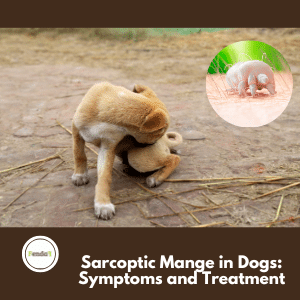
Sarcoptic Mange in Dogs: Symptoms, Transmission and Treatment
Sarcoptic mange is talked about quite a lot, but most dog owners probably hope it remains one of those diseases you only read about online and never encounter yourself. Years ago, I took Ossu to the vet specifically because I suspected mange. We rarely went into the forest, but a fox used to visit our garden, and it looked like the kind of animal you would not voluntarily invite onto the same sofa. Sarcoptic mange was a very real possibility.
The interesting part was that Ossu had no bald patches on his ears. At the time, the internet made it seem as if sarcoptic mange in dogs should be almost a visual bingo card: bald ears, frantic scratching, case closed. Real life is not always that polite. Intense itching can begin before the classic skin changes develop, and a negative skin scraping does not rule out sarcoptic mange.
What is sarcoptic mange?
Sarcoptic mange, or canine scabies, is a contagious skin disease caused by the mite Sarcoptes scabiei. The mite lives in the superficial layers of the skin: the female burrows into the epidermis and lays her eggs there. The life cycle takes place mainly on the host and lasts roughly 2-3 weeks.
Sarcoptes mites are largely adapted to their host species, but mites associated with dogs can also infect other canids. European parasite guidelines identify foxes as an important potential source of infection for dogs. That makes the issue quite down-to-earth even for a dog that does not spend every day in the forest: if a fox visits the garden, or a dog comes into contact with an infected dog or a recently contaminated object, the risk is not zero.
How do dogs catch sarcoptic mange?
The most common route is direct contact with an infected animal. Indirect transmission through objects and surfaces is also possible, although sources place slightly different emphasis on how important it is. Merck describes transmission through contaminated bedding, towels and grooming equipment, for example; CAPC stresses that the mite does not survive well away from the host, so indirect transmission is more likely to require fairly recent contamination. ESCCAP notes that Sarcoptes can nevertheless remain alive in the environment for some time under suitable conditions.
The practical conclusion is not that the whole house needs to become a chemical laboratory. If sarcoptic mange has been diagnosed or is strongly suspected, wash the dog’s bedding, clean blankets and grooming equipment that have been used, and discuss with your veterinarian how other contact animals should be managed. In multi-dog homes, treatment of all dogs in contact is often recommended because an infected dog can be contagious before obvious symptoms appear.
What are the symptoms of sarcoptic mange in dogs?
The most typical symptom is very intense itching, often with a fairly sudden onset. Classic sites include the edges of the ear flaps, elbows, hocks, chest and underside of the body, although the disease can spread over the whole body. Redness, small bumps, crusts, abrasions and hair loss may develop. Constant scratching and chewing can also lead to secondary bacterial or yeast infections.
And this is exactly where Ossu’s story is worth remembering: visible hair loss on the ears is not an entry ticket to the diagnosis. A dog may itch before the classic picture develops, and atypical forms also occur. So it is not a good idea to rule out mange simply because Google Images does not recognise your dog.
Sarcoptic mange, allergy or something else?
Itching is a symptom, not a diagnosis. Sarcoptic mange can resemble allergic skin disease, flea allergy, other parasites and secondary skin infections. This is one reason a dog may sometimes receive allergy treatment for quite a while before Sarcoptes is reconsidered. If an allergy or food reaction seems more likely, I have written about that in more detail in “Food allergy – what should you know?”.
From an integrative perspective, one distinction is important to me: the overall condition of the skin, nutrition, the microbiome, stress and immune function can influence how well a dog copes with skin problems, but they do not turn a parasitic disease into a non-parasitic one. If a dog has Sarcoptes, the mite is the underlying cause. Supporting the body alongside treatment may make sense, but the mite itself still needs to be treated.
Why can a skin scraping be negative?
Diagnosing sarcoptic mange can be surprisingly frustrating. A veterinarian assesses the dog’s symptoms, possible exposure and the distribution of skin lesions, and may take skin scrapings from several sites. The problem is that even in a severely itchy dog, the mite may not be found in the scraping. Both Merck and CAPC emphasise that a negative skin scraping does not rule out sarcoptic mange.
In some cases an antibody test is also used, but its result still has to be interpreted together with the clinical picture. If suspicion is strong and other causes do not explain the situation well, a veterinarian may also use response to treatment as a diagnostic clue. In other words, diagnosing mange can involve a little detective work: one negative sample does not necessarily close the case.
How is sarcoptic mange treated?
The aim of treatment is to kill the mites, interrupt transmission and, when necessary, treat secondary skin infections. Several effective antiparasitic medicines are available today. The choice depends on products registered in the country, the dog’s age and health, other medications and the veterinarian’s assessment.
For canine sarcoptic mange, CAPC lists options including selamectin and topical moxidectin combinations, and notes that several isoxazolines have also been effective in studies. High-dose ivermectin used in older protocols is not something to experiment with at home using a dose found online: some dogs can have genetically increased sensitivity, and toxicity can be serious.
If the skin has been damaged by scratching and a bacterial or yeast infection has developed, separate treatment may be needed. With severe itching, the veterinarian may also assess whether symptomatic relief is necessary. Treatment is therefore not always simply “one tablet and done”, even though modern options against the mite itself are generally very effective. It is also worth remembering that different medicines may work differently in individual dogs. One unsuccessful treatment attempt alone does not necessarily rule out mites.
Can sarcoptic mange be treated only with natural remedies?
Integrative pet care uses various topical preparations, herbs, fatty acids and dietary adjustments to support itchy and irritated skin. These may help support the skin barrier and recovery, especially when a dog has scratched itself extensively. But I would draw a fairly clear line here: I do not have a good basis for recommending natural skin care as a replacement for antiparasitic treatment in a confirmed Sarcoptes infection. Once antiparasitic treatment is in place and the question is how to calm the skin and support recovery, see also “Itchy skin: 10 natural remedies”.
That is not throwing the integrative side into the bin. Quite the opposite: different tools have different jobs. If the problem is a mite, the treatment plan needs to address the mite. At the same time, it can make sense to look at the condition of the dog’s skin, whether the diet suits the dog, necessary fatty acids, stress and other factors that may help the skin recover after inflammation. Supportive care and treatment of the cause do not have to fight each other.
Can people catch sarcoptic mange from a dog?
Yes. Sarcoptes from dogs can cause itchy, red skin lesions in people. Dog-adapted mites usually cannot maintain a permanent life cycle on humans, so this type of infestation is generally self-limiting. If itching or skin lesions persist or are severe, contact a doctor or dermatologist. And if both the dog and people in the household start itching at the same time, that is a useful piece of information for the veterinarian.
What should you do at home once sarcoptic mange has been diagnosed?
The most important thing is to complete the prescribed treatment and not stop as soon as the dog stops itching. Discuss the management of contact animals with your veterinarian. Wash the dog’s bedding and blankets, and clean brushes and other equipment that have been in close contact with the dog. Until the risk of transmission is under control, avoid close contact with other dogs.
While the skin is recovering, watch whether redness, crusts and itching are actually decreasing. If the dog becomes lethargic, the skin begins to discharge, extensive wounds develop or the itching does not improve despite treatment, the treatment plan should be reassessed. Sometimes a secondary infection or another cause of itching is present in addition to the mite. A regular home health check can also help you notice day-to-day changes, because it is easier to spot deviations when you know what your dog’s skin, coat and general condition normally look like.
Ossu’s case taught me one simple thing
I took Ossu to the vet because his possible exposure to a fox and his itching made me suspect sarcoptic mange, even though he did not have the classic picture of bald ears. That is exactly why I wanted to keep this story. Health articles tend to turn diseases into neat checklists, but a real dog does not read the textbook before getting sick.
With what I know today, I would put it this way: with sarcoptic mange, symptoms, possible exposure, the location of lesions, diagnostics and, when necessary, response to treatment all matter together. One missing symptom or one negative skin scraping may not provide the answer. At the same time, not every itchy dog automatically has mange. This is where good veterinary detective work is worth more than an online picture-matching game.
In conclusion
Sarcoptic mange in dogs is a highly contagious but treatable parasitic disease. The most typical sign is intense itching, but the classic bald, crusty ears do not have to be present at the beginning of the disease. Transmission occurs mainly through direct contact, and foxes can be a source of infection for dogs. Diagnosis is not always straightforward with a single skin scraping because mites can be difficult to find in a sample.
If Sarcoptes is likely or confirmed, treatment needs to address the parasite. Supporting the skin, nutrition and overall resilience can fit very well alongside it, but it should not replace effective antiparasitic treatment. The goal is not to choose between “conventional” and “integrative” care. The goal is to get the dog out of the itch cycle and the skin calm again.
Sources
- Merck Veterinary Manual. Mange in Dogs and Cats – Sarcoptic Mange (Canine Scabies).
- Merck Veterinary Manual. Mite Infestation (Mange, Acariasis, Scabies) in Dogs.
- Companion Animal Parasite Council (CAPC). Sarcoptic Mite.
- ESCCAP. Control of Ectoparasites in Dogs and Cats – Sarcoptic Mange.
🐾 FendaF believes in informed choices
The purpose of the FendaF blog is not to tell you what you must do. Our aim is to share knowledge, introduce different evidence-based and integrative perspectives, and help you make more informed decisions for your pet.
Every animal is unique, and no article can replace a consultation, diagnosis or treatment provided by a veterinarian. If your pet has a health concern or you need individual advice, always contact a veterinarian.








Leave a Reply