


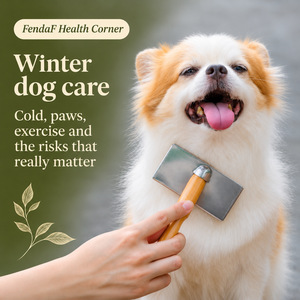
Winter dog care: cold, paws, exercise and the risks that really matter
Reading time: about 10 min
Winter care can sometimes seem easier than care in any other season. There is snow outside, the dog comes home looking clean, and a thick coat seems to provide protection from everything. I have even heard people argue that if a dog wants to stay outdoors, that must mean it can never be cold. I think those are two very different things. A dog may love winter, yet its paws, ears and tail can still be harmed by cold, moisture or slippery surfaces.
Faddu will happily sit in a snowdrift even at minus twenty degrees Celsius. I have known that preference in this well-furred dog for years. But I would not leave him outside for hours on the assumption that ‘he’ll manage’. I want him to be able to move around, rest and come back into the warmth when needed. That is the principle behind my approach to winter care: watch your dog, not just the thermometer.
By the time I updated this article, Faddu had been diagnosed with heart disease and had lost about 20% of his body weight because of the illness. He still loves spending time outside. But these days I have to watch him much more closely: sometimes he starts to feel cold and shivers, yet bravely continues sitting or lying outdoors. That is why it is important to observe the dog rather than simply thinking, ‘he has such a thick, warm coat’.
Frostbite and hypothermia are not the same thing
Two serious problems are often discussed in winter. Frostbite occurs when cold damages local tissue, particularly areas with reduced blood circulation in the cold. For dogs, the edges of the ears, paw pads and tip of the tail are vulnerable. The skin may appear pale or greyish, feel very cold or become swollen and painful, but the full damage may not be immediately visible. Pain and changes can become clearer as the tissue warms.
Hypothermia means the body’s core temperature falls dangerously low. At first a dog may shiver, seek shelter and move more slowly. More serious warning signs include weakness, lethargy, poor coordination, reduced responsiveness and collapse. In severe hypothermia, a dog may even stop shivering. That is not a sign of improvement.
If you suspect frostbite or hypothermia, get the dog out of the cold and wind and seek veterinary help promptly. Gently dry wet fur and keep the dog warm, but do not rub damaged skin or apply direct heat such as a hot water bottle or radiator. Sudden, uncontrolled heating can cause further tissue damage. Severe hypothermia is an emergency.
How cold is too cold for your particular dog?
There is no single universal temperature threshold. Size, coat type, undercoat, age, body condition, health, wind, precipitation and acclimatisation all influence how a dog feels. A small short-haired dog may need a jacket in weather that Faddu considers perfectly pleasant. At the same time, thick fur does not make a dog immune to cold injuries, particularly when the coat is wet or the dog must stand still for a long time.
When the temperature drops below −10 °C, it is sensible to be particularly cautious with strenuous exercise. The concern is not only getting cold or developing hypothermia, but also preparing the muscles, tendons and joints for physical exertion.
Cold affects muscle performance and tissue elasticity. If a dog leaves a warm house and immediately starts sprinting, jumping or making sharp turns, the risk of injury may increase. Proper warming up matters especially in cold weather. Start with relaxed walking, gradually move into a trot, and only then increase intensity if conditions and the dog’s wellbeing allow it. Canine sports medicine often recommends at least 5–10 minutes of active warm-up; colder conditions may call for more time.
However, −10 °C is not a scientifically established threshold below which all running should be forbidden for every dog. A well-conditioned northern breed accustomed to cold and an elderly short-haired dog tolerate exercise differently. Wind, moisture, ice, duration, intensity and health must all be considered.
If a dog shivers, moves stiffly, starts lifting its paws or no longer wants to walk, stop and get indoors. In severe frost, on slippery ground or in unpleasant weather, postponing strenuous training can be wise. Do not assume a dog that loves being outside will always know when to stop, especially if an interesting smell or game keeps it engaged.
A coat is nothing for a dog to be embarrassed about. A properly fitted jacket or jumper can help keep small, short-haired, very young or elderly dogs warm. Some benefit from protection under the belly, an area that gets wet or cold easily in snow. Clothing should never rub, restrict movement or prevent normal cooling during active exercise.
Paw pads, ice and road salt
A dog’s paws face several winter problems at once. Snow builds up between the toes and forms hard ice balls. Slippery ice changes the way a dog moves and may cause falls.
Snow, ice and freezing temperatures are not the only hazards. Road salt and other de-icing products can remain on paw pads, between toes and in the fur even when the weather is dry and the dog’s paws look completely clean after a walk.
That is a problem that often goes unnoticed. People usually wash their dog’s paws after a muddy walk, but frequently skip it when the weather is cold and dry. Salt and de-icer residues may then remain on the paws for hours, irritating the skin and encouraging dryness and cracking. Some products may cause more serious skin damage after prolonged or concentrated contact.
Dogs can also ingest these substances when licking their paws. Depending on the chemical and the amount swallowed, that can cause digestive irritation or, in larger quantities, poisoning.
After any walk on salted roads or pavements, rinse the paws with lukewarm water and carefully dry between the toes, even if the paws look spotless. That reduces both prolonged skin contact and the chance of the dog licking de-icer residue into its mouth.
If long hair between the toes collects ice balls, you can carefully trim it shorter without injuring the skin or removing more protective coat than necessary. Keep the nails a suitable length to help the dog walk securely.
Boots suit some dogs very well. Others initially lift their legs as if we had attached four mysterious objects to them. Practise calmly indoors, let the dog move freely and check that the boots do not chafe. Paw balm may provide a protective barrier and help with dryness, but it does not replace washing and cannot make every de-icer harmless.
FendaF’s practical paw-care routine:
Before going out, check paw pads and spaces between the toes. Avoid heavily salted sections if possible. During the walk, notice any paw lifting or limping. Afterwards gently remove ice balls, rinse paws when needed and dry thoroughly. If a paw is very painful, bleeding or the dog refuses to put weight on it, more wax is not the answer: the injury needs assessment.
Winter at home: rest, moisture and warmth
After a cold walk, a dog needs a genuine chance to dry off and rest. Thick fur may feel dry on the surface while the undercoat remains damp. If you need to wash the dog, dry it thoroughly before another long outing in the cold. Regular brushing removes loose undercoat and tangles; it does not mean thinning the coat as much as possible for winter.
A warm, dry bed matters, especially for an older dog with sensitive joints. A familiar resting place away from a cold stone floor may be much more comfortable than a draughty spot near the door. A raised bed can sometimes avoid direct contact with cold flooring, but make sure an elderly dog or one with mobility difficulties can access it easily.
Heat sources also bring risks. Fireplaces, heaters, radiators and hot stove surfaces can cause burns if a dog falls asleep too close. With an open fireplace, sparks are another concern. If your dog enjoys warmth, allow it to lie at a safe distance. Be particularly careful with electric heated mats when an animal cannot move away freely or has reduced sensation. A safe arrangement always lets the dog leave the heat.
A dog living outdoors needs, at minimum, a dry, wind-protected, appropriately insulated shelter, drinking water that is not frozen, and care suited to its health and coat. Even a dog long accustomed to outdoor living should not simply be left unattended in the cold for days. My preference is always to give the dog a chance to come indoors when needed.
Winter exercise, older dogs and slippery ground
Winter does not mean taking exercise away from dogs for months. We should choose a manageable level of activity and safer surfaces. On icy pavements, dogs may tighten their muscles and change their stride to avoid slipping. An older dog or one with joint problems may become stiff even after a short walk.
If a dog moves less easily in cold or slippery weather, look for a pattern: at what temperature does it happen, could the surface be responsible, how quickly does stiffness ease after resting, and is there still pain or limping indoors? Some dogs benefit from shorter, more frequent walks. For others, sniffing and relaxed walking work better than a sudden game of fetch. Repeated pain or clear lameness warrants veterinary assessment.
I like the idea that we should not automatically reduce an older dog’s exercise simply because of age. Actual ability is what matters. Our older dogs have sometimes surprised us with their energy, but that does not mean every senior can manage the same workload. Stiff joints, heart disease, breathing difficulties and muscle loss all change the plan.
Despite his heart disease, Faddu still joins us on 6.5-kilometre forest walks on Sundays. I specifically asked our cardiologist how much he was allowed to exercise. He said I should trust my own judgement and my knowledge of Faddu’s condition. The cardiologist explained that he saw no reason to impose a fixed exercise limit on Faddu solely because of his diagnosis. We cannot cure his heart, but taking away the activities he loves could seriously diminish his quality of life.
That does not mean a dog with heart disease can be exercised without limits. I watch Faddu’s wellbeing, breathing, movement and recovery. But I do not want to deprive him of the joy of walking in the forest simply because he has a diagnosis. And today he walks at the front of our group, just as he used to.
I take a similar approach to supplements: I would rather discuss what they are for and what to monitor in a particular dog than automatically add several jars when winter arrives. Certain supplements may be worth considering for some dogs with joint disease, but they do not replace appropriate movement, weight management or pain relief when needed.
Food, water and winter habits
People often say every dog needs more food in winter. In reality, it depends on energy expenditure. A dog that stays outside for long periods and is very active in the cold may need more calories than usual. A dog living in a warm home whose walks become shorter because of ice may need less. That is why I look at body condition and actual activity instead of automatically increasing portions in winter.
Water matters just as much as in summer. A dog that loves eating snow may not get enough fluids from it, especially if fed dry food. If the water bowl is outdoors, check that it has not frozen. Very cold drinking water may not appeal to every dog, so offering fresh water at a suitable temperature can make sense.
Dry skin and cracks in paw pads may worsen in winter. Moderate topical care can help, but itching, redness and repeated paw licking should not automatically be dismissed as ‘winter dryness’. Inflammation, irritation, parasites or pain may be responsible. Coconut oil is a good skin moisturiser, but it also adds calories, so the potential benefits and suitability need to be considered in context. Topical care and dietary changes are two different questions.
Winter hazards we should not underestimate
For me, one of the most serious hazards around the home is antifreeze containing ethylene glycol. Spills on a garage floor or driveway can be highly toxic to dogs even in relatively small amounts. If ingestion is suspected, this is not a situation for watching at home or looking up an internet remedy: seek emergency veterinary care immediately. Early treatment is crucial. Do not wait for symptoms.
Consider piles of shoveled snow beside fences, which may give a dog a new route over the barrier. Snow and ice on roofs can fall during a thaw. A frozen pond or lake may look solid to a dog even when the ice cannot bear its weight. Do not leave a dog alone in a car for a long time on a cold day: the interior can become dangerously cold. A running car in a closed garage adds the risk of carbon monoxide poisoning.
These are not reasons to give up winter walks. They are reasons to choose routes, watch the surroundings and make small decisions before the dog gets into trouble.
In conclusion
As far as I am concerned, Faddu may continue sitting in his favourite snowdrift. I do not have to carry him indoors every time merely because I feel cold myself. But I watch how he moves, whether he shivers, whether he asks to come in, the condition of his paws and whether he has somewhere warm and dry to rest.
Winter dog care is not a rigid table of minus temperatures or an automatic supplement regimen. It is looking at coat, age, health, movement and environment together. Sometimes the most useful winter equipment is a good jacket or paw balm. Sometimes it is simply a person who notices that a walk has already served its purpose.
Read also: World Cleanup Day with dogs.
Sources
Cornell University College of Veterinary Medicine. Winter safety tips.
RSPCA. Winter & cold weather care for dogs.
🐾 FendaF believes in informed choices
The purpose of the FendaF blog is not to tell you what you must do. Our aim is to share knowledge, introduce different evidence-based and integrative perspectives, and help you make more informed decisions for your pet.
Every animal is unique, and no article can replace a consultation, diagnosis or treatment provided by a veterinarian. If your pet has a health concern or you need individual advice, always contact a veterinarian.









Leave a Reply