


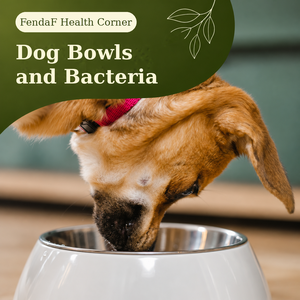
Dog bowls and bacteria: how often should you wash them?
Reading time: about 7 min
How often do you wash your dog’s food and water bowls? After every meal, or only when they look dirty? I have to admit I’m not always as conscientious as I should be. And frankly, one of my dogs may be more aware of that than I am. Oscar dislikes water that has been sitting in his bowl for hours and sometimes waits until he’s really thirsty before drinking it. He’s more forgiving about his food bowl.
That is why I wanted to investigate what actually happens in a dog bowl. Is a dry-food bowl safer than one holding wet food? Is plastic always worse than metal? And do we really need strong disinfectants?
What have dog-bowl studies found?
In 2011, NSF International examined 22 homes and 30 common household items, testing for microorganisms including coliform bacteria, yeasts and moulds. Pet bowls were among the more contaminated items. But this was a small sample, measuring microbes on surfaces rather than the frequency with which dogs or people became ill because of a bowl.
A US study published in 2022 surveyed 417 dog owners about hygiene and sampled 68 bowls for microorganisms. Following guidance on food handling and bowl washing reduced microbial contamination on bowl surfaces. Washing is therefore not just a question of neatness: its effect can be measured.
A 2023 Italian study surveyed 351 dog owners and 186 cat owners and examined 96 dog food bowls. Overall microbial counts were higher with wet food than dry food. Unexpectedly, the metal bowls in this sample had more microbes than plastic bowls. Bowls cleaned in a dishwasher tended to be less contaminated than hand-washed ones, although some comparison groups were small and not all differences were statistically robust.
These results are a good reason to avoid claims such as “metal is always cleaner” or “dry-food bowls don’t need washing”. Age, scratches, food type, washing habits and the time residues remain in the bowl may all influence contamination.
Can healthy dogs cope with bacteria better?
Dogs differ from humans in digestive physiology and stomach acidity, and they may tolerate certain microbial exposures differently. That does not mean dogs cannot develop salmonellosis or other bacterial diseases, or that their saliva and food cannot transmit microbes to people. Some apparently healthy dogs may carry pathogens without visible illness.
Food hygiene is especially important when there are small children, older people, pregnant women or immunocompromised family members at home. Raw meat and raw pet food deserve special attention because infection risks may be higher. This does not mean every raw diet causes disease, but careful handling, storage and surface cleaning matter.
How often should you wash a dog’s food bowl?
The FDA recommends washing and drying dog food bowls after each use and cleaning water bowls daily. The CDC distinguishes by food type: wet-food bowls after each use, and dry-food and water bowls at least once a day. Hot water and dish soap, thorough rinsing and drying are suitable. Especially with wet or raw food, do not leave residues sitting in the bowl.
A practical trick is to keep two bowls. While one is washing or drying, the other is ready for the next meal. I find that easier than hoping I’ll remember every bowl after a long workday.
Should you change the drinking water too?
A water bowl stays damp throughout the day, collecting dust, hair and microbes from the dog’s mouth. If the water looks slimy or the bowl feels slippery, topping it up is not enough. Wash the bowl properly. Offer fresh water regularly, particularly in hot weather or after exercise.
Oscar’s dislike of standing water is my personal observation. It doesn’t prove that water left for a few hours is automatically dangerous, but it reminds me to consider my dog’s preferences. A sudden change in how much a dog drinks can also indicate a health problem rather than just bowl cleanliness.
What is biofilm, and why isn’t changing water enough?
The slippery layer you sometimes feel inside a dog’s water bowl may not just be ordinary dirt. It can be a biofilm: a community of microorganisms attached to a surface. Bacteria produce a sticky protective matrix that helps them stay in place. Biofilms can form on surfaces that otherwise look clean and may not always be visible.
Integrative veterinarian Judy Morgan points out that biofilm can contain pathogens. Not every biofilm, however, means a dangerous infection. Finding microorganisms on a bowl and proving that a dog became ill because of them are two different things. Good hygiene helps reduce unnecessary microbial exposure, but does not allow us to claim, for example, that daily washing prevents chronic kidney disease.
The method of washing matters. Pouring away old water and replacing it does not remove an attached film. Use warm water and dish soap with a clean brush or sponge, rubbing every part of the inner surface. Rinse thoroughly and dry. Drinking fountains also require cleaning their hard-to-reach parts, including the pump and filter housing. A filter cannot replace washing.
Which bowl material makes the most sense?
I prefer smooth food-grade stainless steel or good-quality glazed ceramic. Glass is easy to clean but can break. Plastic is light and convenient for travel, but scratched surfaces may hold food residues and should be replaced when worn.
That is a preference, not evidence that all steel bowls are free from bacteria. In the Italian sample, metal bowls had higher bacterial counts than plastic ones. Even a good material still needs cleaning. Choose bowls without cracks that are easy to wash and intended for food contact. Replace rusty, cracked or damaged items. For a closer look at materials, see our article Choosing a Safe Dog Bowl.
Do bowls need to be disinfected with bleach?
Recommendations differ. Some hygiene authorities describe using diluted disinfectants when needed. Integrative veterinarian Karen Becker prefers thorough washing with hot soapy water and proper rinsing, since cleaning-chemical residues should not end up in a dog’s mouth. I also start with ordinary washing rather than chemical disinfection after every use.
When handling raw food, dealing with a suspected infection or protecting vulnerable family members, disinfection in addition to cleaning may be reasonable. Follow the particular product’s dilution, contact time and food-contact surface rinse instructions. Never mix cleaning chemicals, and don’t use bowls again until safely rinsed and dry. In particular, never mix vinegar with bleach: harmful gases can be released.
And what about toys?
My original article discussed toys too, and that remains relevant. Soft toys collect saliva, moisture and dirt; hard toys become soiled and cracks may trap residues. Wash robust toys according to manufacturer instructions, and launder suitable fabric toys. Broken or deteriorating toys can also be a swallowing hazard.
But this article is primarily about bowls. A full cleaning schedule for every kind of toy deserves a separate article, not a complication to the simple bowl-cleaning routine.
Wash and dry the food bowl after each meal. Wash the water bowl at least daily and replace the water more often as needed. Use hot water and dish soap, rinse well and allow to dry. Follow official disinfection guidance for raw food, suspected infections or vulnerable household members. Replace scratched, cracked or rusty bowls. For drinking fountains, clean the pump and filter housing regularly and change filters according to the manufacturer’s instructions. Use a dedicated clean bowl brush or a thoroughly cleaned sponge.
In summary
I’ve had days when the bowls got less attention than they should. But research gives a simple reason to change that habit: washing really does reduce microbes. This doesn’t demand a perfectly sterile home, just a few consistent steps each day. And Oscar gets fresh water without needing to call a quality-control meeting about it first.
Sources
- FDA: Proper Storage of Pet Food & Treats
- FDA: Tips for Safe Handling of Pet Food and Treats
- NSF International: Household Germ Study
- Dog owners’ feeding practices and bowl hygiene (2022), PMID 35385485
- Pet feeding habits and dog food bowl contamination (2023), PMID 38062425
- FDA: Risks of raw pet food
- Bark & Whiskers / Karen Becker: Food and water bowls
- Judy Morgan (2021): Biofilm Dangers
- CDC (2026): Cleaning and Disinfecting Pet Supplies
- Wright & Carroll (2018): Canine drinking water and bowl material
🐾 FendaF believes in informed choices
The purpose of the FendaF blog is not to tell you what you must do. Our aim is to share knowledge, introduce different evidence-based and integrative perspectives, and help you make more informed decisions for your pet.
Every animal is unique, and no article can replace a consultation, diagnosis or treatment provided by a veterinarian. If your pet has a health concern or you need individual advice, always contact a veterinarian.




Leave a Reply