



Happy dog: how to read body language
Reading time: about 3 min
We all want a happy dog at home. Most owners know their dogs quite well, but I like to remind myself that a wagging tail is not the whole story. A dog can wag its tail because of excitement or uncertainty, too. Fortunately, we have many more clues than a tail.
Happiness is not a ten-box checklist
Dr Karen Becker has described ten signs that may indicate a dog feels good: soft eyes, relaxed posture, willingness to play, a healthy appetite, an enthusiastic greeting and a desire for closeness. They are worth noticing, but not turning into rigid requirements. A dog can be happy without playing every day, enjoying belly rubs or throwing a welcome-home parade.
Look at the whole picture, not one signal
Soft eyes, a relaxed face and natural movement provide useful information. Tail carriage depends on breed, anatomy, circumstances and the individual dog’s normal posture. Rolling onto the back is not always an invitation to pet the belly: one dog may do so in trust, another out of uncertainty. If the body stiffens or the dog moves away, give them space.
Play bows and joyful sounds
The play bow, with the front lowered and the hindquarters raised, is a familiar play signal. Dogs may also produce distinctive panting sounds during play. Research on animal play vocalizations is fascinating, but describing a sound as “laughter-like” does not mean we can equate a dog’s inner emotional state with human happiness. Context and the other dog’s response always matter.
Appetite, sleep and behavior
A good appetite can suggest that a dog feels well, yet some very sick dogs still eat enthusiastically (Labradors are especially famous for this). Some healthy dogs are picky. Chewing furniture does not automatically mean a dog is unhappy. Age, lack of training, excitement, boredom, separation-related distress or insufficient rest may be involved. When habits change suddenly, rule out pain and health problems first.
A happy dog also has the right to say no
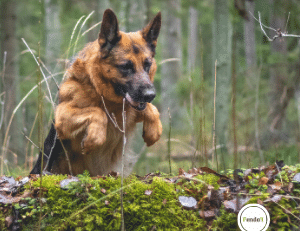
For me, one of the most important signs of welfare is whether the dog has choices. Can they sniff, move away, sleep undisturbed, decline a game or seek affection when they want it? Our dogs’ lives need not be endless entertainment. Sometimes a peaceful walk in the forest, without constant demands, is the best thing.
FendaF’s practical welfare check
For one week, observe three things: does the dog have a daily opportunity to explore in their own way; can they truly rest without interruption; and have their usual eating, movement or social habits changed? If interest suddenly disappears, anxiety appears without an obvious explanation, or you notice pain or mobility problems, investigate rather than dismissing it as a change of mood.
Karen Becker’s ten signs in detail
- Relaxed eyes, gaze, ears and mouth: the face is not tense and may almost look as if the dog is smiling.
- Soft, loose posture and natural tail movement, interpreted in the context of the individual dog.
- An absence of destructive behavior may suggest needs are better met, but does not prove happiness on its own. Chewing can also arise from anxiety or other causes.
- Interest in play, walks and other enjoyable activities. A sudden loss of interest may signal pain or illness.
- Rolling onto the back and showing the belly: a relaxed, playful movement is different from a stiff appeasement or discomfort signal.
- A normal appetite; sudden changes deserve attention.
- Some dogs give short, high-pitched happy barks, while many happy dogs are quiet.
- A play bow, with the front end lowered and hindquarters raised.
- Voluntarily leaning against someone or seeking physical closeness on the dog’s own terms.
- A happy greeting when a familiar person returns; its intensity differs greatly between dogs.
These are Dr Becker’s ten observations, not ten compulsory conditions.
Can animals “laugh” during play?
Dr Becker also refers to research on play vocalizations in at least 65 animal species, including primates, domestic dogs, cattle, birds, foxes, seals and mongooses. The central idea is that playful sounds can help another participant distinguish play from threat or aggression. Equating these vocalizations with human laughter would go too far: their mechanisms and social meanings differ across species. With dogs, watch the sounds, the entire body language and the other dog’s response.
Sources
- Karen Becker: 10 Ways to Tell If Your Dog Is Happy
- Winkler & Bryant (2021): Play vocalisations and human laughter, 65 species
- JAVMA (2019): Evidence-based paradigm shifts in veterinary behavioral medicine
🐾 FendaF believes in informed choices
The purpose of the FendaF blog is not to tell you what you must do. Our aim is to share knowledge, introduce different evidence-based and integrative perspectives, and help you make more informed decisions for your pet.
Every animal is unique, and no article can replace a consultation, diagnosis or treatment provided by a veterinarian. If your pet has a health concern or you need individual advice, always contact a veterinarian.









Leave a Reply