


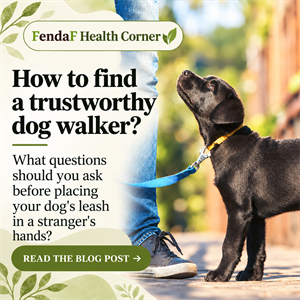
How to find a trustworthy dog walker?
Reading time: about 7 min
Who would you trust with your dog’s lead? For me, that question goes far beyond whether someone loves dogs and turns up on time. On a walk, one unexpected encounter, a lead slipping from someone’s hand or a misread signal can be enough to change the situation.
I have been a dog owner for over 20 years, and I would not casually take an unfamiliar dog into my home to look after. I am careful with my own dogs too. There have been tensions between Peku and Ossu, and between Fentu and Ossu, even though they had known each other for years without previous problems. That is my experience, not evidence that every meeting between dogs ends badly. But it has taught me that a familiar dog does not automatically mean a predictable situation.
Faddu can react to other larger dogs, while Fentu reacts to cars. Ossu is generally calmer, until someone crosses a line as he sees it. I recognise their small signals. Someone unfamiliar with them still has to learn those signals. And a dog may behave very differently with that person than with me.
That is why I would not choose a walker simply on price or an appealing advert. I would ask ten questions, watch the person with my dog and put the important agreements in writing.
1. Does your dog feel safe with this person?
Start with a meeting where you are present. Do not force your dog to leave with a stranger straight away. Watch whether the walker gives your dog time to sniff, keeps a sensible distance and avoids trying to force trust. A dog’s initial hesitation does not mean the person is unsuitable, but one enthusiastic greeting does not prove that they will cope well together in traffic or when meeting another dog either.
A short trial walk with the owner reveals far more than five minutes in the hallway. Another trial can follow later, when the dog is ready. Fentu is happy to come for a walk with me, but with a complete stranger — I am not sure. I would not automatically assume that Faddu or Ossu would either.
2. What dogs and challenging situations have they handled?
Ask for examples, not just a number of years. How do they recognise fear, overexcitement, tense body language or a situation where a dog needs more distance? What do they do when a barking dog, cyclist or running child approaches? A good answer describes prevention and moving away, rather than putting a dog ‘in its place’.
The American Veterinary Society of Animal Behavior (AVSAB) recommends reward-based dog training and warns against techniques that cause pain or fear. That applies to a walker too: they should not need lead jerks or punishment to keep an unfamiliar dog under control.
3. Can they actually keep your dog under control?
With a large dog, saying ‘I am strong’ is not enough. A sudden lunge from a dog weighing over 40 kg can catch even a very fit person off guard. That is why I want to know whether the walker can maintain a safe distance, use a well-fitting harness and lead, and avoid situations where the entire plan depends on arm strength alone.
If your dog tends to back out of their walking equipment or bolt when startled, there needs to be a specific equipment and handling plan. The walker must not change the equipment on their own initiative or let your dog off the lead.
4. How long is the actual walk?
A ‘half-hour service’ may mean 30 minutes of walking, but it may also include travel, getting the dog ready and finishing up afterwards. Ask how many minutes your dog will actually spend moving outdoors, and whether they will also have time to sniff and walk at their own pace.
An elderly, unwell or recovering dog may not manage the same pace or distance as a young, active dog. More kilometres do not always mean a better walk. An older or unwell dog may need shorter walks more often. What matters to me is that the dog comes home in good condition, rather than simply exhausted.
5. Do their promises match what they actually do?
Ask for references and speak to at least one previous client. Notice whether the person arrives at the agreed time, answers your questions and is willing to admit when a dog or situation is beyond their abilities. It is a particularly good sign if they ask about your dog’s health, fears, medication, equipment and habits themselves.
Trust does not come from a good first impression alone. It comes from keeping agreements even when nobody is watching.
6. Will your dog be walked alone or with other dogs?
I would not automatically allow my dogs to join an unfamiliar walking group. That is my boundary, not a blanket ban. A carefully matched small group may suit some socially compatible dogs, while an individual walk is clearly safer for others.
Ask how many dogs are walked at once, how they are matched, whether the owner gives separate consent to group walks and what happens if tension develops between the dogs. You also need to agree whether your dog may greet other dogs at all. ‘They all get along’ is not a safety plan.
7. What happens in rain, heat, freezing weather or thunderstorms?
Ordinary rain need not mean cancelling a walk. But thunderstorms, slippery conditions, extreme heat or severe cold may call for a different plan. Ask how the walker decides to shorten a walk, change the time or replace it with a calmer activity. This is particularly important for short-nosed and elderly dogs, and those with heart or breathing problems.
If a dog has a chronic illness, I would certainly ask whether the walker has experience with dogs in similar situations. Through Faddu’s heart disease, I have seen for myself how even the same dog’s walks can vary greatly from one day to the next. Some days he wants to rest along the way, and he needs to be allowed to do so. The walker must be able to recognise when a dog needs a break and when the walk should end altogether.
8. Do they know the area and how to choose a route?
A walker who lives nearby may be a practical choice, but distance alone tells you nothing about competence. What matters more is whether they know safe routes, traffic hazards, dogs that may be loose and your dog’s triggers. Some dogs need a familiar routine; others enjoy variety. The route must suit the individual dog, rather than simply being the walker’s favourite.
9. What will they do in an emergency?
This is a question I want answered before the first walk. What happens if your dog gets loose, is injured, bites someone, collapses or develops an unexpected health problem? Does the walker have first-aid skills, a charged phone, your contact details and your vet’s details to hand, and do they know the nearest suitable clinic?
I would agree in writing when the walker must call me immediately, when they must seek emergency veterinary care without delay and what authority they have to arrange veterinary care if I cannot be reached. Treatment decisions belong to the vet, but the owner and walker should agree in advance how to act in an emergency and cover the costs.
10. What are the arrangements for liability, a contract and insurance?
Ask whether the service is provided by a business or a private individual, what the contract terms are and whether they have liability insurance. Ask them to explain what it actually covers: injury or damage involving another person or animal, injuries to your own dog, lost keys or other situations. Having insurance does not mean that every possible incident is automatically covered.
In my view, it is important to ask for the contract and insurance terms before making a choice, rather than relying on the word ‘professional’ in an advert.
If the walker will enter your home while you are away, you also need to agree how keys will be kept and how your home will be secured. Who uses the keys, may they pass them to anyone else, and what happens if they lose them? For me, this is not a minor detail: I am entrusting this person with access to my home as well as my dog.
FendaF’s practical check before the first walk
I would start with a trial walk together, then give the walker five things in writing: the dog’s triggers and health information; permitted equipment and route; whether contact with other dogs is allowed; emergency contacts and authority to act; and an agreement on walk duration, reporting and liability. If the walker cannot explain how they will prevent an escape or conflict, I would not proceed until there is a safe plan.
If the dog is clearly frightened during the trial, freezes, tries to escape, or the walker uses forceful punishment, I would end the meeting. If the concern lies in the dog’s behaviour rather than simply the person’s suitability, I would seek help from a qualified behaviour professional if needed.
Why am I so careful myself?
Irene and I have an agreement to look after each other’s dogs when needed. Yet I do not take her dogs out of the garden for walks. I know Fentu and the other dogs, but I cannot know in advance how they will behave if Irene is not there and something unexpected happens. Likewise, I do not assume that another person reads Faddu’s or Ossu’s body language exactly as I do.
That does not mean trustworthy dog walkers do not exist. They do. But to me, being trustworthy means knowing your abilities and limits, asking the right questions before acting and not experimenting at my dog’s expense. Sometimes the most responsible decision is to say: ‘I will not walk this dog on my own just yet.’
Sources
- Dogs Trust. How to find a good dog walker. Publication date not stated.
- MSPCA-Angell. How to Find a Dog Walker. Publication date not stated.
- Battersea. How to find a dog walker, day care or dog sitter. Published 5 December 2023; updated 3 July 2026.
- American Veterinary Society of Animal Behavior. Position Statement on Humane Dog Training. 2021.
🐾 FendaF believes in informed choices
The purpose of the FendaF blog is not to tell you what you must do. Our aim is to share knowledge, introduce different evidence-based and integrative perspectives, and help you make more informed decisions for your pet.
Every animal is unique, and no article can replace a consultation, diagnosis or treatment provided by a veterinarian. If your pet has a health concern or you need individual advice, always contact a veterinarian.
FAQ
Arrange a trial walk together, ask about experience and references, and check the contract and insurance terms. Put your dog’s health information, equipment, route, rules for contact with other dogs and emergency plan in writing.
The pace, length and frequency must suit the individual dog. An older or unwell dog may need shorter, more frequent walks and rest breaks. The walker needs the dog’s health information and must recognise when to end a walk.
Record the owner’s and vet’s contact details, rules for immediate calls and emergency care, and authority and payment arrangements if the owner cannot be reached. Agree who may use the keys, whether they may be passed on, how they are stored and what happens if they are lost.








Leave a Reply