


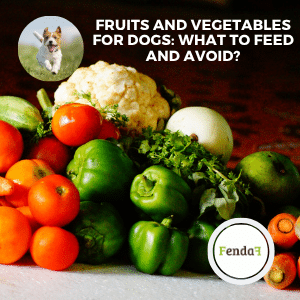
Fruits and vegetables for dogs: what to feed and what to avoid?
A few years ago I swapped my usual breakfast for a smoothie, and quite naturally some of it ended up in my dogs’ bowls too. The idea was simple: if I eat berries, vegetables and other fresh foods myself, why couldn’t my dogs have a little more real food in their diet as well? Today I would phrase one thing more precisely. A dog does not have to eat fruit and vegetables for its diet to be automatically ‘healthy’, but well-chosen plant foods can add fibre, vitamins and minerals, polyphenols, carotenoids and other plant compounds. They do not turn any single food into a miracle cure, but they can support the gut, antioxidant defences and the body’s own natural detoxification processes.
And this is the important distinction: ‘a dog can eat this’ is not the same as ‘a dog needs a lot of it’. If a dog eats a complete and balanced main diet, fruit and vegetables should remain additions rather than displacing the base food. Integrative nutrition often emphasises plant diversity and rotating colourful plants. Conventional veterinary nutrition is more conservative about quantities and tends to treat these foods as treats or toppers. The two approaches do not actually have to fight: a small and varied plant addition can fit both, as long as the overall diet remains balanced.
How much fruit and vegetables should a dog eat?
We have previously used a simple guideline of keeping fruit and vegetables at around 10% of the overall diet when they are additions to a complete food. Dr Peter Dobias also uses a broader range of about 10-30% vegetables in his integrative approach, but this should not be treated as a universal recipe. It matters whether the percentage refers to calories, food weight or a home-prepared diet, and whether the whole ration remains nutritionally balanced.
In practice I would start much more simply: introduce a new food in a small amount, change one thing at a time and keep an eye on the dog’s stool. If the stool becomes loose, gas develops or the dog simply does not want to eat it, there is no need to wrestle with broccoli in the name of health. Rotating plants of different colours over the weeks makes more sense than feeding large quantities of one ‘superfood’.
Raw, steamed or pureed?
Dogs can make use of plant material, but preparation affects how easily nutrients become available. Dobias recommends chopping, pureeing or lightly steaming vegetables when appropriate. This is especially practical for leafy greens and tougher plants. At the same time, every carrot does not need to meet a blender: a small piece of carrot or a slice of cucumber can simply be a crunchy treat.
Broccoli is a good example of why ‘heat destroys everything’ is not a particularly useful rule. Sulforaphane formation depends on glucoraphanin and an enzyme called myrosinase, and chopping, pureeing and the intensity of heat treatment can change the result. Broccoli sprouts contain these compounds in more concentrated amounts than mature broccoli, but that does not automatically mean a dog needs a therapeutic amount of sprouts. Food is food; a therapeutic dose of a specific bioactive compound is a different question.
Good vegetables for dogs
Broccoli and broccoli sprouts
Broccoli provides fibre and contains glucosinolates typical of cruciferous vegetables, from which sulforaphane can be formed. In integrative nutrition it is valued particularly for these plant bioactives. Small amounts suit many dogs well, while larger amounts may cause gas and gastrointestinal irritation. Broccoli sprouts are more concentrated in sulforaphane precursors, so there is no reason to pile them into the bowl on the principle that more must be better.
Carrot
Carrot is simple, inexpensive and usually well tolerated. It provides fibre and carotenoids and works as either a small topper or a crunchy treat. Chewing a whole carrot is sometimes promoted as a way to remove plaque, but it should not be treated as a substitute for tooth brushing.
Pumpkin
Pumpkin is one of the most practical plant additions because its fibre can help change stool consistency. This is why it is often used in integrative practice for both overly soft and overly hard stools. The effect still depends on the amount, the rest of the diet and the individual dog. Pumpkin is not a universal digestive remedy, and the cause of diarrhoea or constipation may need separate assessment.
Zucchini and cucumber
Both have a high water content and low energy density, making them useful when treats do not need to be calorie bombs. One practical warning from the older article still stands for zucchini: do not feed a very bitter fruit. Bitterness can indicate a higher cucurbitacin content, and such a zucchini is not suitable for people either.
Green beans
Green beans provide fibre and can be a pleasant low-calorie treat. Serve them without salt, butter or seasoning. Especially for a dog losing weight, the point is for beans to replace more calorie-dense treats, not simply be added on top of them.
Leafy greens
Spinach, kale and other leafy greens provide different vitamins, minerals and plant compounds. There is no need to fear them, but context matters here too. Spinach, for example, contains oxalates, so feeding large amounts every day is not sensible for every dog, particularly one with a relevant urinary-stone risk. I would not say that chlorophyll simply ‘binds toxins and carries them out of the body’, but that does not mean plants have no role in supporting the body’s natural protective and detox pathways.
Asparagus, cabbage, cauliflower and Brussels sprouts
All of these can enrich the diet in small amounts. Cruciferous vegetables can, however, increase gas, and there is no need to chase theoretical health benefits with very large portions. If the dog’s stomach says ‘no’, that is reason enough to reduce the amount or choose something else.
Can plants support the body’s detox processes?
Yes, if by detox we mean the body’s own natural processing and elimination mechanisms, rather than the idea that one green leaf pulls every ‘toxin’ out of the body. The liver has a central role in metabolising foreign substances, but the kidneys, gut and antioxidant defence systems are involved as well. These systems need nutrients to function normally, and plant foods can provide fibre, vitamins, minerals and bioactive compounds.
Cruciferous vegetables are a good example. Sulforaphane formed from glucosinolates in broccoli and broccoli sprouts affects the Nrf2 signalling pathway, which regulates several cellular protective and so-called phase II detoxification enzymes. In dogs, orally administered sulforaphane has been shown to be absorbed, with metabolites detectable in both blood and urine. That does not turn broccoli into a ‘detox medicine’, but it provides a real biological basis for saying that plants can support the body’s own protective and detoxification pathways.
Peppers, tomatoes and other nightshades: forbidden for dogs with inflammation?
We previously shared advice to avoid peppers, tomatoes, potatoes and aubergine in inflammatory disease because they contain solanine. Today I would add more nuance. The idea that nightshades worsen inflammation is often discussed in integrative nutrition, but there is not a good basis for turning it into a universal ban for every dog with arthritis or another inflammatory condition.
For safety, the plant part and degree of ripeness matter much more. A ripe tomato fruit can be suitable in a small amount, whereas green tomatoes and tomato stems and leaves contain more glycoalkaloids and are hazardous to dogs. Green or sprouted potatoes should not be fed either. Pepper flesh may work as a small addition if the dog tolerates it. If you repeatedly notice symptoms worsening with a particular food, the individual response naturally matters more than a general internet rule.
Fruit and berries: the sweeter side of the bowl
Fruit can provide fibre, polyphenols and other plant compounds, but compared with many vegetables it also brings more natural sugars. I would therefore use fruit as a small addition or treat rather than a large part of the daily diet. Berries are especially convenient here: a few blueberries or raspberries in the bowl are quite different from half a banana for a small dog.
Blueberries and other berries
Blueberries, raspberries, strawberries and cranberries contain different polyphenols and plant compounds with antioxidant activity. Blueberry anthocyanins are studied in contexts including oxidative stress and cognitive function. This does not mean blueberries treat disease, but berries are a good example of how a small whole-food addition can bring something to the diet beyond calories alone.
Apple and pear
Both work well in small pieces. I would remove the core and seeds simply as a practical safety measure. The fact that the amount of cyanide in the seeds is usually tiny is not a reason to deliberately feed them to a dog. Removal takes ten seconds and settles the question.
Banana
Banana provides potassium and other nutrients, but it is fairly high in sugar. Think a couple of slices rather than a separate meal. The old claim that banana sugar ‘feeds bad bacteria and yeast’ is too simplistic: the microbiome does not divide itself that neatly into good and bad characters, and the effect depends on the whole diet.
Melon and watermelon
Their high water content makes them pleasant summer treats. Remove the watermelon rind and larger seeds and offer the flesh in small pieces. You can also freeze pieces for a cooling snack.
Orange, mandarin and other citrus fruits
A small amount of flesh can suit many dogs, although the acidic taste is not everyone’s favourite and larger quantities may upset digestion. I would no longer simply call lemon, lime and grapefruit ‘safe fruits’ worth offering to a dog. A dog does not need citrus fruit for vitamin C because a healthy dog synthesises vitamin C itself.
Pineapple and mango
The flesh can be suitable in small amounts. Remove the tough skin and core from pineapple and the stone from mango. As with other sweeter fruits, the amount matters more than any ‘superfood’ status.
Stone fruits
The flesh of peach, nectarine, plum and mango can be edible, but the stones should always be removed. A stone can cause choking or intestinal obstruction, and the seed portions of some stone fruits contain cyanogenic compounds. I would be even more conservative with cherries: if you want to give your dog fruit, there are much simpler options.
Garlic: the dose matters more than the ‘dangerous’ label
Garlic is a good example of how one study can send an entire food onto the blacklist when the dose is stripped of context. We have written about this in more detail in FendaF’s garlic article. In a Hokkaido University study published in 2000, four dogs were given garlic extract every day for seven days at an amount equivalent to about 5 grams of fresh garlic per kilogram of body weight. For a 20 kg dog, that would mean roughly 100 grams of fresh garlic every day. In an earlier FendaF example, the amount for an approximately 18 kg dog was in the region of 20 garlic cloves per day. That is not comparable to adding a small, body-weight-appropriate amount of garlic to food.
The dogs did develop changes in red blood cells and blood parameters, but none developed haemolytic anaemia. This shows that garlic has oxidative potential at very high doses, but it does not justify the conclusion that garlic is dangerous to dogs at every dose. For me, the key word is dose. Integrative nutrition uses garlic in small, controlled amounts, and FendaF’s position is likewise that garlic in appropriate amounts is not automatically dangerous to dogs. What should be avoided is the idea that if a little is good, more must be better.
Garlic contains sulphur compounds, inulin and various micronutrients, and in integrative practice it is used, among other things, to support digestion, immunity and natural parasite control. The strength of evidence is not the same for all of these proposed benefits, so I would not present garlic as a medicine. If you use fresh garlic, it is commonly recommended to crush or chop it and let it stand for about 10 minutes before feeding. For very small dogs, dogs with a history of anaemia or blood disease, and dogs taking medication, especially drugs affecting clotting or immunity, it is sensible to discuss the amount with a veterinarian first. There is also a warning that Japanese breeds may be more sensitive to garlic, so extra caution is appropriate for them. We discuss dosing and the background in more detail in the separate FendaF article ‘Garlic and dogs’.
What should a dog definitely not eat?
There is no need to make this philosophically complicated. Grapes and raisins can cause acute kidney injury in dogs, and a safe amount cannot be predicted for an individual dog. If a dog eats them, contact a veterinarian immediately rather than waiting for symptoms. I would not deliberately feed onion, chives, leek or wild garlic. I do not put garlic on the same ‘never feed’ list because with garlic the central issue is dose. A corn cob is not itself poisonous, but it can cause a dangerous intestinal obstruction.
I also always remove large fruit stones and hard cores. Seasoned vegetable mixes, sauces and prepared foods are a separate category: an otherwise safe carrot does not become better because it is swimming in onion, excess salt and fat. If a prepared food contains garlic, the issue is more that the amount may be impossible to judge, not that every trace of garlic is automatically dangerous.
Avocado: is one bite a catastrophe?
There is a lot of black-and-white talk around avocado. Persin is potentially toxic to animals, with higher concentrations in the leaves, stem, skin and stone. Dogs are less sensitive to persin than several other species, and a small amount of flesh does not usually mean catastrophe, but I would not choose avocado as a regular addition for a dog. The reason is fairly prosaic: alongside the possible risk it is high in fat and calories, and the stone is an obstruction hazard. A little avocado flesh accidentally ending up in a smoothie is a different situation from putting half an avocado in the dog’s bowl every day.
Can vegetables really affect health?
This is an interesting point where the whole-food idea is more than an attractive theory. A 2005 case-control study compared 92 Scottish Terriers with bladder cancer with 83 Scottish Terriers with other diagnoses. Eating vegetables at least three times a week was associated with a lower risk of transitional cell carcinoma of the bladder, with the association particularly apparent for green leafy and yellow-orange vegetables. It is an intriguing signal, but not proof that broccoli ‘prevents cancer’ in every dog: this was an observational study in one breed and one tumour type.
What I like more is the broader idea behind the study. Real food can be more than decoration in the bowl, but no berry or vegetable needs to wear the crown of a health deity. Any benefit is more likely to come from the overall quality and diversity of the diet, an appropriate amount, and the fact that the individual dog actually tolerates it.
My simplest option: a smoothie or small topper
I definitely want to keep the smoothie idea from the original article because it is practical in real life. If I make myself a smoothie from dog-friendly ingredients, I can set aside a small portion before adding my own extras. Another option is to puree or finely chop a small batch of vegetables and freeze it in an ice-cube tray. That way I do not have to negotiate with a broccoli stalk in the kitchen every day.
A simple mix could be a little zucchini or cucumber, a few blueberries, some leafy greens and a small piece of carrot. I would not add sugar, sweeteners, flavoured yoghurt or anything that may contain xylitol to the dog’s portion. If you want to use fresh food more regularly, see FendaF’s article 5 foods to enrich your pet’s diet.
Two more practical details
First, wash fruit and vegetables thoroughly under running water. If you wish, diluted vinegar water can be part of your washing routine, but the earlier claim that it ‘removes 98% of bacteria and pesticide residues’ needs more context because the result depends on the microorganism, pesticide and washing method. Washing reduces surface contamination but does not automatically make produce pesticide-free. If this matters to you, practical options include changing the source, choosing organic produce where possible, and peeling produce when that makes sense.
Second, the vitamin and mineral content of fruit and vegetables can vary with variety, soil, growing conditions, ripeness, storage and processing. I would not use one old comparison of tomato iron content as proof that all modern plant foods are ‘nutrient depleted’, but the underlying idea that growing conditions influence nutritional value is entirely reasonable. In practice, this brings me back to diversity: plants of different colours and types provide different vitamins, minerals, fibres and phytonutrients, and no single ‘superfood’ needs to carry the whole load.
In summary
Fruit and vegetables can enrich a dog’s diet beautifully, adding vitamins, minerals, antioxidants and other plant bioactives alongside fibre. I prefer diversity: a little leafy green, some cruciferous vegetables, pumpkin or zucchini, carrot now and then, and small amounts of berries and fruit. Not everything needs to be fed every day, and none of it needs to be called a miracle food.
The most important boundaries are simple: a complete main diet remains the main diet, new additions are introduced gradually, the dog’s individual tolerance is observed, and genuinely toxic or hazardous choices stay out of the bowl. The value of the integrative perspective here is its reminder of plant diversity, whole foods and support for the body’s own detox and protective pathways; the value of conventional veterinary medicine is helping to define the safety boundaries. I would take from both the parts that genuinely help the dog.
Sources:
- Dr Peter Dobias. Vegetables for dogs?
- Merck Veterinary Manual. Garlic and Onion (Allium spp) Toxicosis in Animals.
- Merck Veterinary Manual. Grape, Raisin, and Tamarind Toxicosis in Dogs.
- Merck Veterinary Manual. Food Hazards – Avocado.
- Raghavan M, Knapp DW, Bonney PL, Dawson MH, Glickman LT. Evaluation of the effect of dietary vegetable consumption on reducing risk of transitional cell carcinoma of the urinary bladder in Scottish Terriers. JAVMA. 2005;227(1):94-100.
- PetMD. What Vegetables Can Dogs Eat?
- PetMD. What Fruits Can Dogs Eat?
- FendaF. Garlic and dogs.
- Lee KW, Yamato O, Tajima M, et al. Hematologic changes associated with the appearance of eccentrocytes after intragastric administration of garlic extract to dogs.Am J Vet Res. 2000;61(11):1446-1450.
- Tanprasertsuk J, Tate DE, Shmalberg J. Roles of plant-based ingredients and phytonutrients in canine nutrition and health. J Anim Physiol Anim Nutr. 2022;106(3):586-613.
- Pacheco-Palencia LA, et al. Sulforaphane absorption and histone deacetylase activity following single dosing of broccoli sprout supplement in normal dogs.
🐾 FendaF believes in informed choices
The purpose of the FendaF blog is not to tell you what you must do. Our aim is to share knowledge, introduce different evidence-based and integrative perspectives, and help you make more informed decisions for your pet.
Every animal is unique, and no article can replace a consultation, diagnosis or treatment provided by a veterinarian. If your pet has a health concern or you need individual advice, always contact a veterinarian.








Leave a Reply