


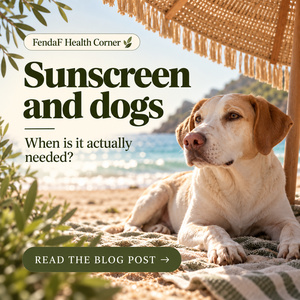
Sun protection for dogs: when is it needed?
Reading time: about 5 min
I had not given much thought to whether dogs need sun protection. Fur already provides a protective layer, but I started asking when it might not be enough. The real question is not whether every dog needs sunscreen, but which skin is exposed to ultraviolet radiation and under what conditions.
Which dogs need extra attention?
Pay attention to hairless or sparsely coated areas, light or poorly pigmented skin, exposed noses and skin recently shaved for grooming or surgery. Even a short-haired dog spending long periods outdoors may need protection. What matters is the skin exposed, not just breed or size.
Does shaving help in summer?
People sometimes shave a dog extremely short with good intentions. But fur protects skin from UV radiation, and removing it may increase sun damage. This does not mean every coat prevents overheating. Heat risk depends on weather, humidity, activity and the dog’s condition. Sunburn and heatstroke are different problems requiring different prevention.
Shade comes before sunscreen
Provide shade and a cool resting place, avoid prolonged exposure to intense midday sun and consider lightweight UV-protective clothing for vulnerable dogs. Red or painful skin needs protection from further sun. Persistent crusts, ulcers or pigmentation changes on the nose or ears warrant veterinary assessment.
Which sunscreen is safe?
Dogs lick their skin. Evaluate not only how a product works topically, but what might happen if it is swallowed and in what quantity. A product designed for dogs with clear ingredients and directions is a better starting point than an arbitrary human sunscreen. Some human products contain zinc oxide or salicylates. Swallowed zinc oxide commonly causes digestive symptoms, including vomiting and diarrhea; severe poisoning is not inevitable after minor contact, but substantial or repeated ingestion needs assessment. Chewing the tube can also be dangerous.
What about natural oils?
Recommendations for carrot seed oil, red raspberry seed oil and homemade mixtures circulate online. I appreciate natural ingredients, but reliable sun protection has not been demonstrated for these oils. A 2021 study measured much lower UV protection than the high SPF values often quoted online. A 2026 in-vitro study likewise found insufficient protection for most plant oils tested. These findings do not mean every formulated plant-oil product is ineffective, but claims such as SPF 20 to 35 for individual oils are not reliable guarantees. Homemade mixtures have no verified SPF. Essential oils introduce additional irritation and ingestion concerns.
Can nutrition support skin?
Nutrients, antioxidants and fatty acids are legitimate areas of skin research. Vegetables can be part of a balanced diet in appropriate quantities. But watermelon, tomatoes or astaxanthin do not make a dog sunproof. Nutritional support cannot replace reducing UV exposure or using effective topical protection when needed.
FendaF’s practical sun rule
Before walks, check the nose, ears, belly and sparsely coated areas. If skin is exposed, plan shade, shorter sun exposure or appropriate clothing. Use sunscreen only when its ingredients and directions suit dogs and licking can be managed. Burns, severe redness, ulcers or recurring crusts require veterinary advice rather than experiments with oils.
Ingredients worth examining
Herbalist Rita Hogan discusses DMDM hydantoin, propylene glycol, octinoxate, oxybenzone and sorbitan sesquioleate. These are starting points for evaluating ingredients, not a universal toxicity ranking. DMDM hydantoin releases formaldehyde and may cause contact allergy in some people. Propylene glycol in cosmetics does not automatically imply organ damage from normal skin exposure, but ingestion and dose matter. Octinoxate and oxybenzone have been studied for endocrine and environmental effects; those findings do not provide a dog-specific risk estimate. Sorbitan sesquioleate can matter for contact allergy. Evaluate the complete formula and exposure.
Histidine, lycopene and antioxidants
Histidine-derived urocanic acid participates in skin photobiology, but eating raw meat does not give a dog a measurable SPF. Lycopene, carotenoids and omega fatty acids are worthwhile research subjects, yet possible nutritional skin support does not replace shade or appropriate UV protection.
Why homemade oil blends are not verified sunscreen
Hogan described a mixture of 30 ml coconut oil, 15 ml shea butter, 30 ml red raspberry seed oil, 7.5 ml cold-pressed carrot seed oil and two drops of lavender or Roman chamomile essential oil. I respect her herbal expertise, but the mixture has no verified SPF. Claims of SPF 35 for carrot seed oil or SPF 20 for raspberry seed oil cannot be treated as guarantees. Because of uncertain protection and possible irritation or ingestion, I do not recommend this recipe as a sunscreen substitute.
Sources
- Ácsová et al. (2021): UVB protection of vegetable oils
- Popiół-Adamska et al. (2026): Natural photoprotection
- ASPCA: Sunscreen and Zinc Oxide Ingestion in Pets
- MSD Veterinary Manual: Human Topical Agents
- Dogs Naturally: Do Dogs Need Sunscreen?
🐾 FendaF believes in informed choices
The purpose of the FendaF blog is not to tell you what you must do. Our aim is to share knowledge, introduce different evidence-based and integrative perspectives, and help you make more informed decisions for your pet.
Every animal is unique, and no article can replace a consultation, diagnosis or treatment provided by a veterinarian. If your pet has a health concern or you need individual advice, always contact a veterinarian.








Leave a Reply