


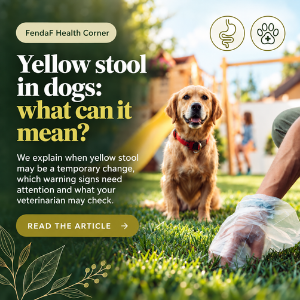
Yellow stool in dogs – what can it tell us?
Stool color can provide a useful clue, but a color is not a diagnosis. The whole picture matters: what the dog ate, what the stool looks like, how often the change occurs and how the dog feels overall.
A dog’s stool is a kind of digestive-system report, but not a laboratory result. One yellow stool does not automatically mean liver, gallbladder or pancreatic disease. Likewise, dark stool alone does not prove bleeding. Color is influenced by food, bile pigments, intestinal transit time and what is happening in the gastrointestinal tract at that moment.
Food can have a major effect. If a dog changes to a lighter-colored food, the stool may also become lighter. Eating liver can make stool very dark, carrot can leave orange pieces and chlorella can give it a greenish shade. So the first question is always very simple: what did the dog eat during the last 24-48 hours?
There is one important exception: black, sticky, tar-like stool, or melena, can indicate digested blood and needs prompt veterinary assessment. Very dark food and melena are not the same thing.
Why is a dog’s stool usually brown?
The liver produces bile, which reaches the small intestine through the bile ducts and helps, among other things, with fat digestion. Bile is yellow-green. As intestinal contents move through the gut, bile pigments are transformed and the stool develops its typical brown color. If intestinal contents move faster than usual, the color may remain more yellow or green because the pigments have less time to change.
This means yellow stool may simply be related to faster intestinal transit. Possible reasons include temporary digestive irritation, a diet change or stress. A single yellow stool in a dog that is eating, drinking, moving and behaving normally is usually not a reason to panic.
When can yellow stool be relatively harmless?
- The dog ate something yellow, orange or green, or had more bone than usual.
- The food or treats changed recently and the gastrointestinal tract is adapting.
- The dog had short-term digestive irritation and the stool moved through the intestines faster than usual.
- Stress, travel, a new environment or another routine change temporarily affected intestinal motility.
- The color changed only once and the dog otherwise feels completely normal.
A Winner Plus manufacturer representative told us that, with their cold-pressed food, a veterinarian monitored the passage of food through the gastrointestinal tract in one dog and observed faster transit. This is a single observation relayed by the manufacturer, not a published comparative study, so it cannot be turned into a general rule that cold-pressed food always passes through every dog faster. It is, however, one possible explanation worth considering in an individual dog if stool color or consistency changes after a diet change.
If yellow stool keeps returning, look deeper for the cause
Persistent or recurring yellow, very pale, greasy or otherwise unusual stool is a symptom, not a diagnosis. What matters is what appears alongside the color: diarrhea, vomiting, weight loss, abdominal pain, increased or decreased appetite, fever, jaundice, lethargy or a change in defecation frequency.
Parasites and gastrointestinal infections
Giardia and other intestinal parasites can cause intermittent or persistent diarrhea. Stool color can change, but a parasite cannot be diagnosed from color. A symptomatic dog may need fecal testing, and for Giardia this may involve a combination of fecal flotation, antigen testing or PCR depending on the situation.
Chronic enteropathy
If the problem lasts for weeks, keeps recurring, or is accompanied by weight loss, vomiting, abdominal pain or poor appetite, chronic intestinal disease also needs to be considered. Today the broader term chronic enteropathy is often used. Some dogs have an important food-responsive component, some have immune-mediated inflammation, and some have several factors at once. Yellow stool alone does not tell us which pattern is present.
Pancreatitis and EPI are not the same thing
With pancreatitis, or inflammation of the pancreas, a dog may have vomiting, loss of appetite, lethargy, abdominal pain, dehydration and diarrhea. Yellow stool can occur in some cases, but it is not a diagnostic sign of pancreatitis. Diagnosis is based on the clinical picture together with imaging and pancreas-specific lipase tests such as cPLI.
With exocrine pancreatic insufficiency, or EPI, stool changes are much more characteristic: the stool is often pale, loose, bulky and foul-smelling, while the dog may lose weight despite a good or even increased appetite. A blood TLI test is much more accurate for diagnosing EPI than looking for “undigested food” in the stool.
Liver, gallbladder and bile ducts
With liver and biliary disease, it is also important to avoid the overly simple logic “yellow stool = liver.” If bile cannot reach the intestine, for example with complete bile-duct obstruction, the stool may instead become very pale or clay-colored. In some forms of jaundice, stool may appear more orange or green. If yellowish or very pale stool is accompanied by yellowing of the whites of the eyes or gums, vomiting, loss of appetite, abdominal pain or abdominal enlargement, the dog needs prompt assessment.
Quick guide to other colors and changes
When assessing stool, look at four things at the same time: color, consistency, contents and surface. Frequency matters too. One unusual stool is a different situation from five unusual bowel movements in a single day.
- Black and tar-like: may be melena, meaning digested blood. This warrants prompt assessment, especially if the dog is weak, vomiting or not eating.
- Red or bloody: fresh blood more often comes from the lower gastrointestinal tract. A small streak can occur with colonic irritation, but a large amount of blood, vomiting, lethargy or very frequent watery diarrhea needs urgent attention. Acute profuse bloody diarrhea is now referred to as AHDS, rather than simply “hemorrhagic gastroenteritis.”
- Very pale, grayish or clay-colored: can occur when bile flow into the intestine is impaired. If the stool is also greasy and bulky, maldigestion, including EPI, should also be considered.
- Green: can come from grass, vegetables or other pigments, but can also occur with rapid intestinal transit. Green color alone does not diagnose gallbladder disease or a bacterial infection.
- Blue or brightly colored: stool color cannot tell you which toxin a dog may have eaten. If there is any suspicion of poison bait or another toxic substance, it is an emergency regardless of color.
- White specks or pieces: these may be undigested bone fragments, but moving or recurring pieces that resemble grains of rice may indicate tapeworm segments.
- Mucus: a small one-time amount may accompany temporary colonic irritation. Repeated large amounts of mucus, blood, frequent urgency to defecate or pain need further investigation.
When should you contact a veterinarian quickly?
- The dog is apathetic, weak, collapsing or clearly in pain.
- There is repeated vomiting, the dog cannot keep water down, or signs of dehydration develop.
- The stool is black and tar-like, or there is a large amount of bloody diarrhea.
- The whites of the eyes, gums or skin become yellow.
- The abdomen is painful or distended.
- The dog is a puppy, a senior, or has another illness and gastrointestinal symptoms are present.
- A foreign body, toxin ingestion or medication overdose is possible.
- Yellow or otherwise unusual stool persists for more than 24-48 hours, keeps recurring, or is accompanied by weight loss or a change in appetite.
What might a veterinarian investigate?
The choice of tests depends on the full clinical picture. Possible tests include:
- fecal testing for parasites, with Giardia antigen testing or PCR when indicated;
- complete blood count and serum biochemistry, including liver and biliary markers;
- a pancreas-specific lipase test such as cPLI if pancreatitis is suspected;
- TLI and often vitamin B12, or cobalamin, if EPI is suspected;
- abdominal ultrasound or other imaging when needed;
- urinalysis or other tests if the overall picture suggests a systemic problem.
What can you monitor at home?
The most useful home “test” is good observation. Take a photo of unusual stool and note any new food, treats, chews, medications, supplements and stressful events. If the problem recurs, take a fresh stool sample to the veterinarian if possible, in a clean sealed container.
I would not automatically keep a dog without food for a long time after every episode of diarrhea or yellow stool. At the same time, integrative veterinarians may recommend a 12-24 hour fast for mild gastrointestinal upset. This still depends on the individual dog and the situation. Puppies, senior dogs and dogs dealing with another illness should not automatically be fasted.
Modern conventional veterinary management of gastrointestinal problems favors earlier feeding in many situations, using small amounts of well-tolerated food.
If your dog tends to have recurring digestive problems, see also FendaF’s article Digestive problems in dogs do not develop overnight.
For practical support for a sensitive stomach, see Sensitive digestion in dogs: how to support the gut gently.
If yellow stool is accompanied by vomiting, see also Vomiting in dogs: when can you monitor at home and when is a veterinarian needed?.
In summary
Over the years our own dogs have produced lighter, darker, slimier and softer stools, and most isolated changes have disappeared as quickly as they appeared. Faddu once managed a voluntary 1.5-day “food strike” until I finally gave in and brought liver to the rescue. That personal experience is useful context, but it does not prove that another dog would respond in the same way.
From our own dogs, I have developed the impression over the years that the better balanced a dog’s general health, gut health and immune function are, the less often random digestive problems tend to appear. This fits the integrative veterinary view of the gastrointestinal tract, microbiome, gut barrier and immune system as one interconnected system. It does not mean that strong immune function prevents digestive disorders, or that every gastrointestinal problem is caused by weak immunity.
The most important thing is to look for a pattern. Was the change a one-off or is it recurring? Is the dog eating, drinking and behaving normally? Have vomiting, pain, weight loss, jaundice or blood appeared as well? Stool gives us a lot of information, but it tells us the most when we interpret it together with the dog’s overall condition.
Sources used
- Bark & Whiskers: Yellow Poop? Here’s What It Might Be Telling You
- Merck Veterinary Manual: Exocrine Pancreatic Insufficiency in Dogs and Cats
- Merck Veterinary Manual: Pancreatitis in Dogs and Cats
- Merck Veterinary Manual: Jaundice in Small Animals
- Companion Animal Parasite Council: Giardia
- Merck Veterinary Manual: Acute Hemorrhagic Diarrhea Syndrome in Dogs
- Merck Veterinary Manual: Canine Parvovirus Infection
- The Natural Pet Doctor / Dr. Katie Woodley: How to Rebuild Your Dog’s Gut Health After Antibiotics
🐾 FendaF believes in informed choices
The purpose of the FendaF blog is not to tell you what you must do. Our aim is to share knowledge, introduce different evidence-based and integrative perspectives, and help you make more informed decisions for your pet.
Every animal is unique, and no article can replace a consultation, diagnosis or treatment provided by a veterinarian. If your pet has a health concern or you need individual advice, always contact a veterinarian.



Leave a Reply